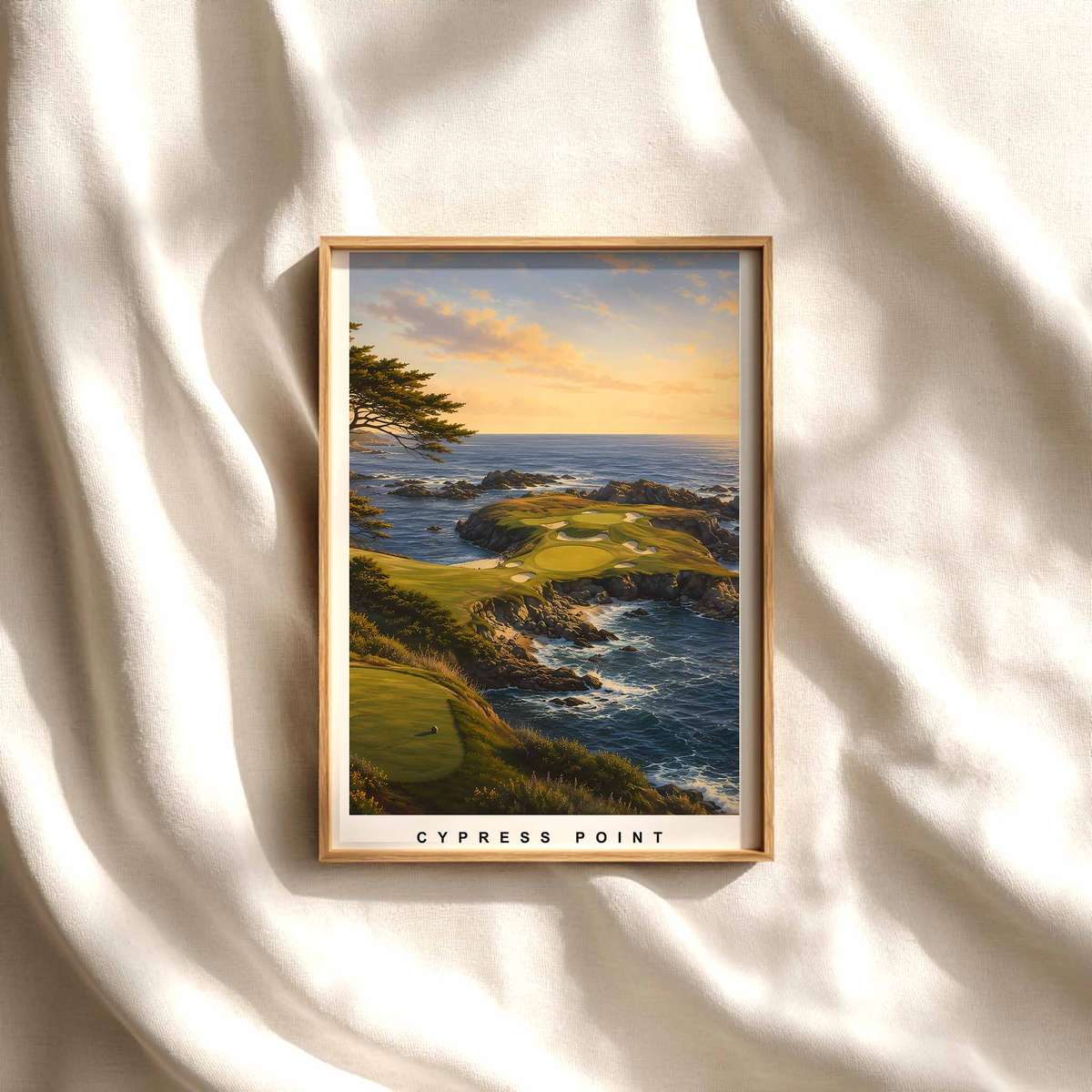
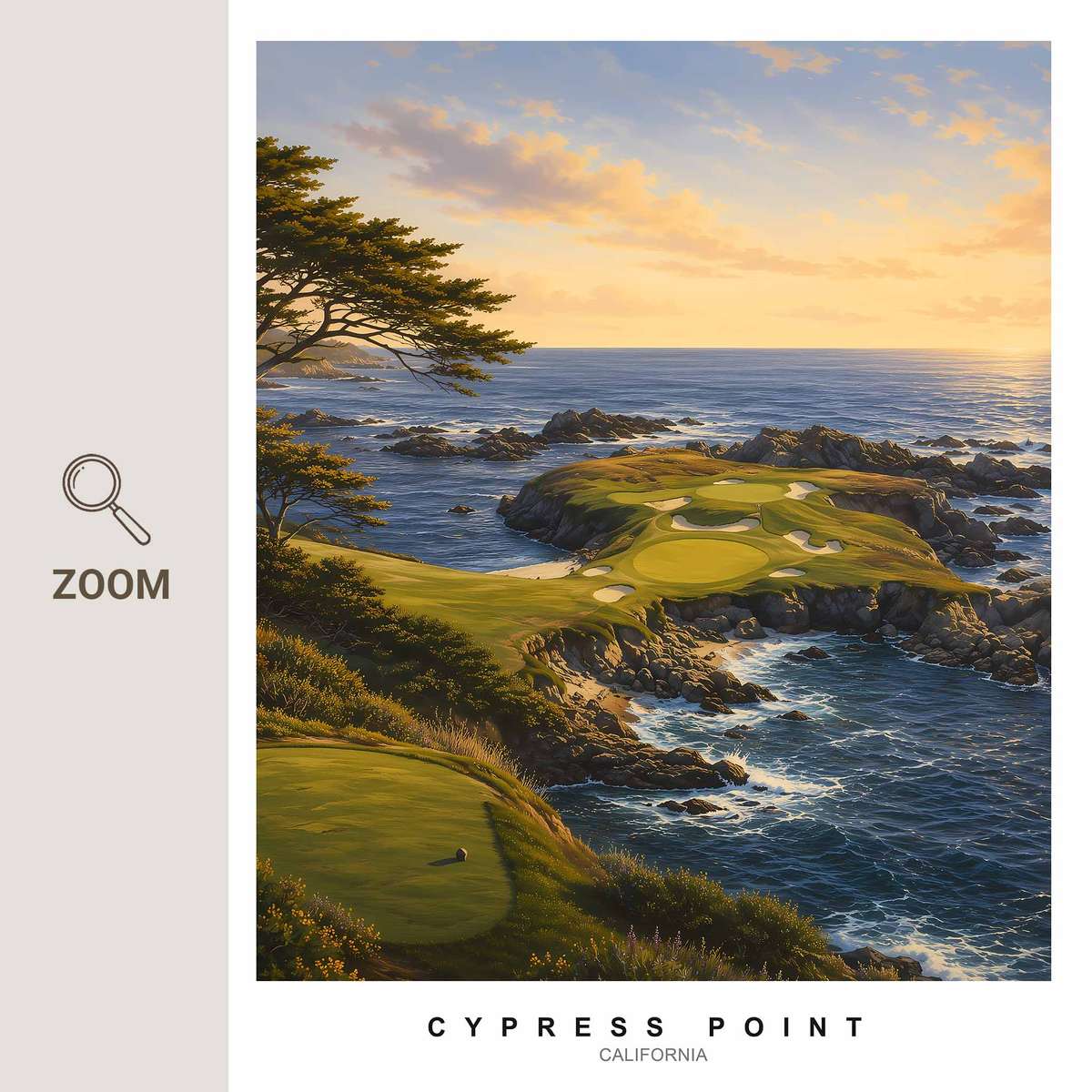
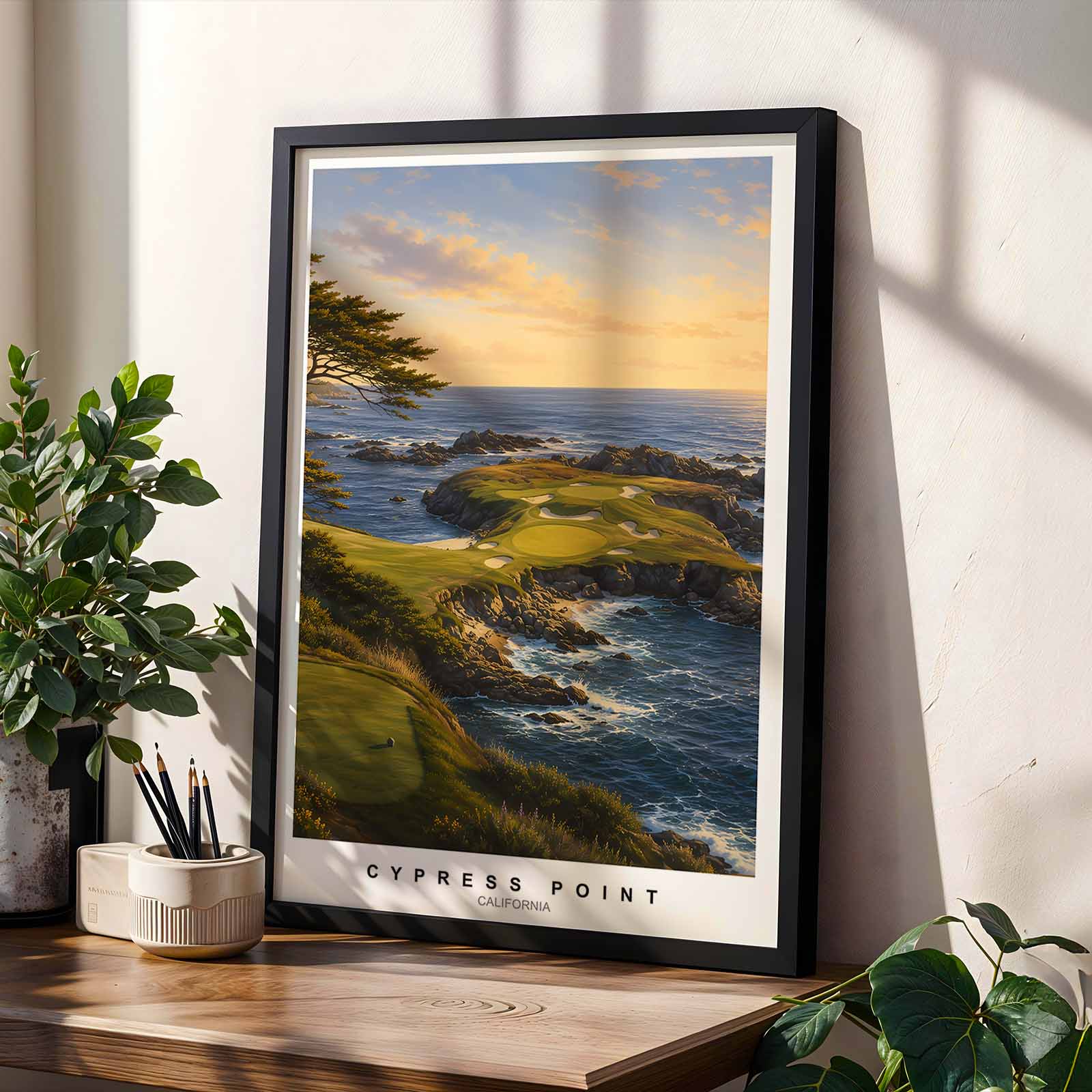
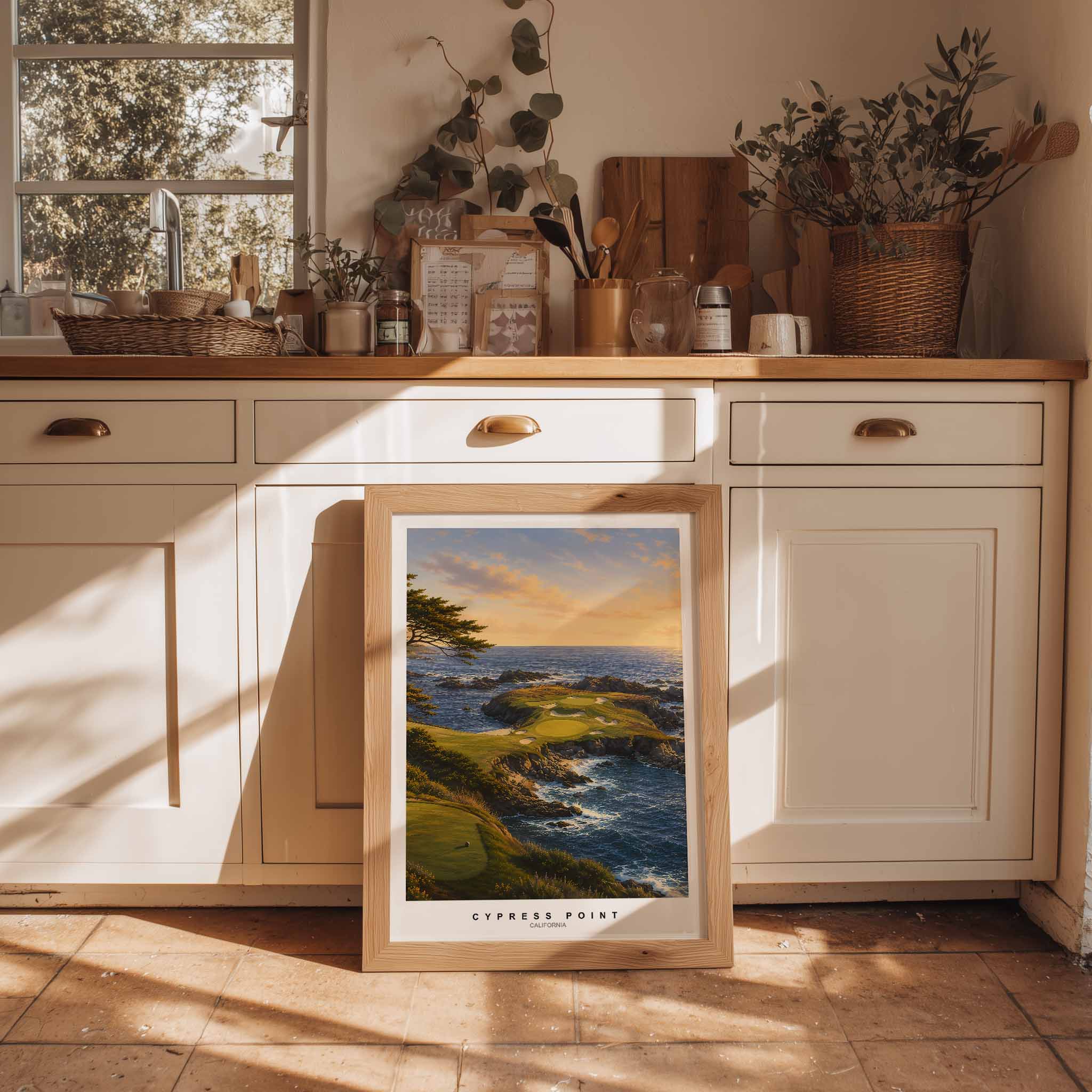
There are golf images that record a shot, and then there are images that become a place. This poster study of Royal Dornoch reads first as an inhabited landscape: a cool, northern light lays itself across dune and heather, the horizon stretches with quiet authority, and greens sit like islands, deliberate and elevated within the scene. For anyone looking for golf ideas for him, this is not memorabilia or sporting drama; it is a calm object of presence that changes a room.
The photograph’s compositional economy is what gives it a wall-worthy voice. Fairway rhythms and the soft ridges of turf are simplified into planes of shadow and tone. The eye flows along the gentle contours rather than stopping at figures or movement, and the green—perched, slightly higher than the surrounding ground—becomes the visual anchor. That elevated green reads in a living room or study as a promise of order: something crafted and small against a vast, patient backdrop.
Light here is cold and crystalline, the kind that flattens bravado and brings texture forward. It is the light of distance and clarity rather than warmth, and it lends the image a refined restraint. In interiors this quality performs beautifully: it calms warmer palettes, introduces a quiet midtone for wood and leather to sit against, and gives depth to pared-back décor. The result is an image that isn’t demanding; it simply holds a room with poise.
[IMAGE_INSERT_ARTICLE_01]
Beyond single elements, the scene communicates a spatial story. The immense sky and the long sweep of land create breathing room, an architectural silence that invites contemplation. Even without players the course is emphatically legible—the routing suggests a human hand, while the landscape asserts its own rules. That tension—between careful design and natural vastness—is precisely what translates into a satisfying piece of wall art. It reads as intentional, yet effortlessly lived-in.
Texture matters as much as composition. The subtle grain of the greens, the tawny fleck of dune grass, and the matte softness of distant heather provide a tactile promise; viewers imagine the hush underfoot. This sensory suggestion is what elevates golf imagery into decorative art. It’s not asking you to remember a tournament or a score; it’s asking you to feel a place: cool, steady, and quietly ordered.
When selecting golf ideas for him, consider pieces that function first as landscape portraits. They become focal points in studies, offices, and intimate living spaces because they offer both a story and an atmosphere: depth without clutter, calm without sterility. A Royal Dornoch study like this brings the room a sense of endurance—an image that ages well because it is anchored in place rather than moment.
Finally, the poster’s presence is architectural. Hung at eye level, it alters how light behaves in the room, drawing attention to horizon lines and inviting the eye to rest. For interiors that value restraint and thoughtfulness, such an image is a subtle declaration: a love of place, an appreciation of quiet craft, and a belief that the most elegant golf pieces are those that look like they belong to the house rather than to the game.


 ↧ Digital download
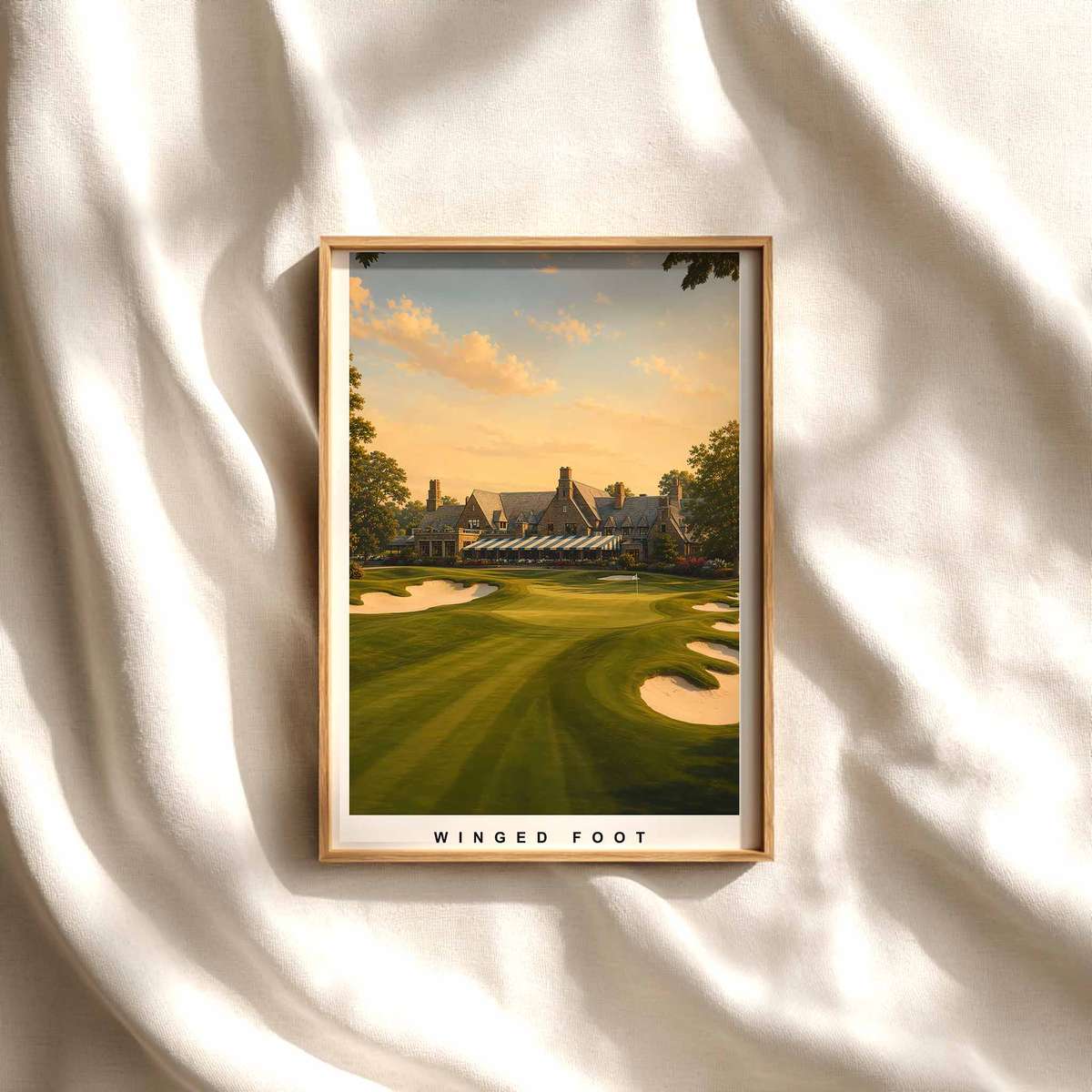
Winged Foot West: Visual Gravity in Golfer-Led Wall Art
Digital download
↧ Digital download
Winged Foot West: Visual Gravity in Golfer-Led Wall Art
Digital download
 ↧ Digital download
Pinehurst No. 2: The Elegant Austerity of a Golf Course Print
Digital download
↧ Digital download
Pinehurst No. 2: The Elegant Austerity of a Golf Course Print
Digital download
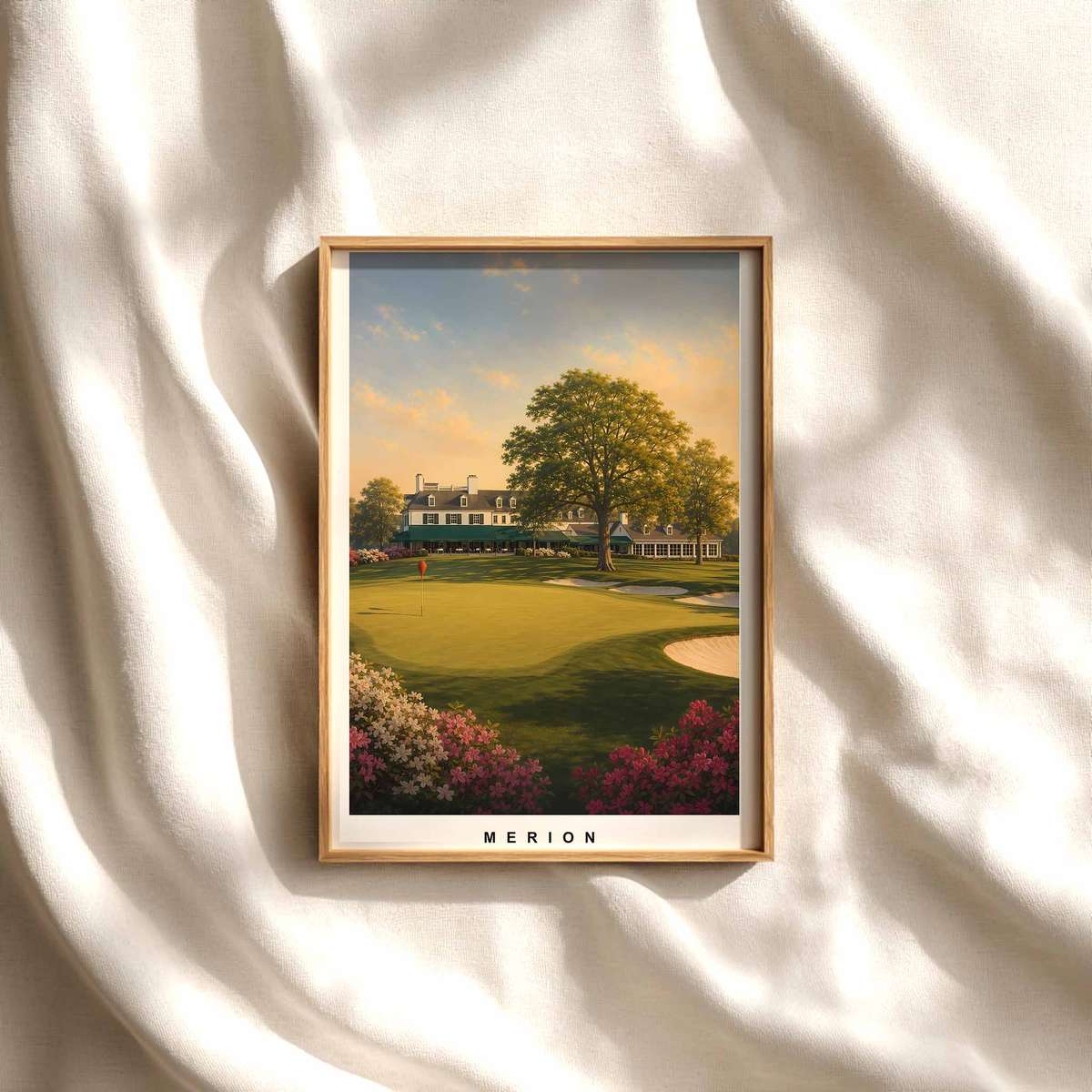 ↧ Digital download
Merion East: Quiet Golf Art for the Study, Clubhouse and Gentleman's...
Digital download
↧ Digital download
Merion East: Quiet Golf Art for the Study, Clubhouse and Gentleman's...
Digital download
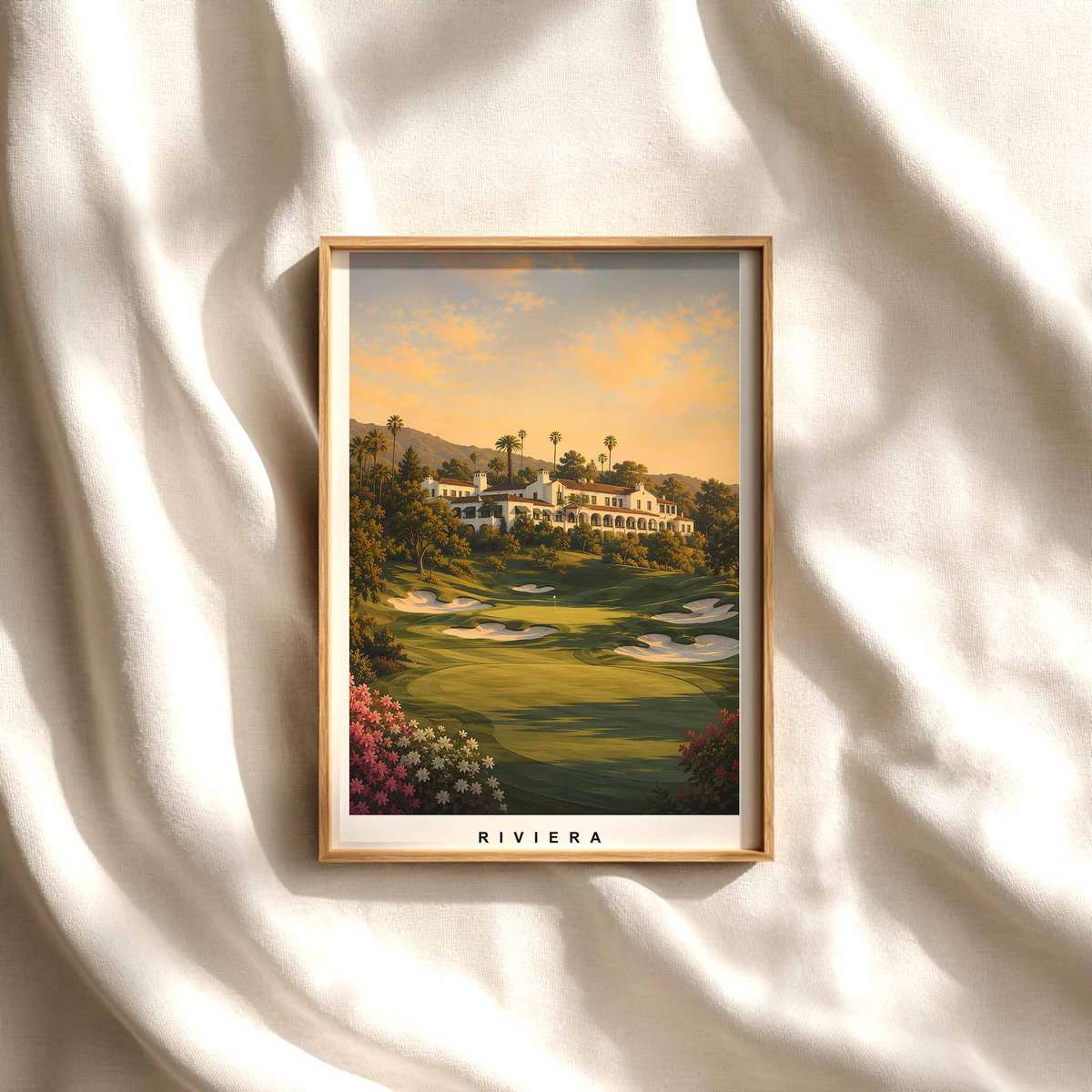 ↧ Digital download
Riviera Swing Moment — Golf Poster Art That Captures Balance...
Digital download
↧ Digital download
Riviera Swing Moment — Golf Poster Art That Captures Balance...
Digital download