How Shinnecock Hills’ Layered History Shapes Its Modern Reputation
Shinnecock Hills is less a single moment of design than a sequence of edits layered across coastal dunes. Founded in 1891, it has been reshaped by successive architects and by its raw, wind-swept site. That trajectory—creation, expansion, modernization, and selective restoration—explains why the course reads as both fiercely natural and deliberately crafted today.
Quick answer
Shinnecock Hills’ reputation comes from an early establishment in American golf, a series of influential redesign phases—Davis/Dunn, Macdonald/Raynor, then William S. Flynn—and ongoing restoration work that deliberately returns the property to its windswept, links-like character.
What you will learn here
- How the course began and who shaped the first layouts.
- The architectural shifts that created the modern routing.
- Why the coastal landscape and wind dictate strategy and reputation.
WHERE THE COURSE BEGINS
Shinnecock Hills Golf Club was founded in 1891, making it one of the oldest incorporated golf clubs in the United States. The first playing grounds were modest: an original 12-hole course laid out by Willie Davis. Those earliest moves established the club’s place in the first wave of American golf clubs and set the groundwork for later enlargement and refinement.
THE ORIGINAL DESIGN IDEA
The 1890s plan was practical and site-driven. Willie Davis created the initial holes on the dunes, and by 1895 Willie Dunn expanded the layout to 18 holes. Those first designers worked within the constraints and opportunities of sandy soils and natural contours rather than creating an imposed parkland aesthetic—an early indication that Shinnecock’s identity would come from its terrain as much as from architects’ ambitions.
THE MACDONALD & RAYNOR MODERNISATION
In the years that followed, Charles Blair Macdonald and Seth Raynor carried out a significant modernization around the 1910s. Their work introduced the era’s celebrated "template" holes—Redan, Cape, Eden and Short variations—and expanded the course’s scale toward what was then a championship length, roughly in the mid-range of early 20th-century yardages. This phase translated classic strategic ideas into Shinnecock’s coastal canvas and brought a new architectural vocabulary to the property.
FLYNN’S REDESIGN AND THE ROUTING THAT DEFINES THE COURSE
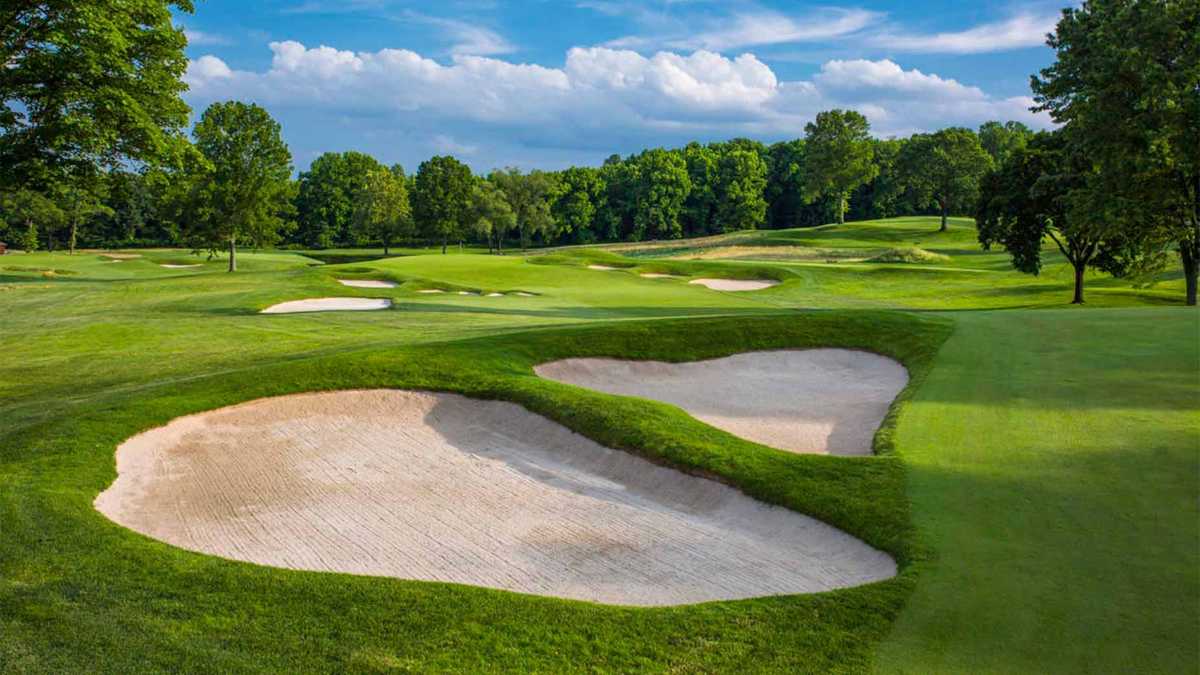
The most crucial structural change arrived when William S. Flynn was hired after the club acquired more land in 1927. Flynn re-routed and redesigned the course between 1928 and 1931; the routing that opened in 1931 largely defines Shinnecock’s modern footprint. Flynn’s approach emphasized triangulation of holes to take advantage of prevailing winds, strategic bunkering, and off-set greens—moves that amplified the site’s natural drama and created varied shot values that test all facets of a player’s game.
LANDSCAPE, ROUTING, AND COURSE IDENTITY
Shinnecock’s soils, dunes and coastal exposure are not background detail; they are active ingredients in the course’s identity. Sandy, well-draining fairways and windswept dunes create firm, fast conditions and reward ground game creativity. Flynn’s routing deliberately exposed holes to the wind, forcing players to adjust club choice, trajectory and strategy on a hole-by-hole basis. In short, the land dictates vulnerability and variety—two hallmarks of classic links golf.

TOURNAMENT HISTORY AND COMPETITIVE MEMORY
Shinnecock’s prominence in competitive golf stems from its age and its championship hosting. The club was one of the five founding members of the United States Golf Association in 1894, and it began hosting USGA events early on, including U.S. Amateur play in the 19th century and multiple U.S. Opens later. Appearances across many decades have reinforced Shinnecock’s reputation as a venue that demands both strategic nuance and mental resilience.
REDESIGNS, RESTORATIONS, AND RECENT WORK
Rather than continuous reinvention, Shinnecock’s more recent agenda has been selective restoration. Throughout the 2010s and with notable work around 2016, the club pursued tree removals and restorations to recapture Flynn’s open, windswept character and to restore original green shapes and sandscapes. Those interventions are not cosmetic—they are attempts to return playing angles, sightlines and wind exposure closer to the course’s historic intent, ensuring the architecture functions as intended in tournament conditions.
HOW THE COURSE IS SEEN TODAY
Today, Shinnecock is read as an exemplar of layered American golf architecture: clear early origins, high‑profile template work, a defining Flynn routing, and careful restorations that privilege historic playing principles. Its championship resume and exposed coastal terrain give it an aura of authenticity. Players and architects alike point to the way the ground and wind shape strategic choices—evidence that preservation has preserved the course’s challenge.
WHY THE HISTORY STILL MATTERS
The succession of designers and the club’s deliberate restorations matter because they show how a great course survives: not by freezing a single moment but by stewarding a set of playing principles that respond to place. Shinnecock’s history explains its present toughness, its strategic subtlety and its status within American golf heritage. The club’s decisions—to adopt template ideas, to re-route for wind, and later to remove intruding vegetation—have kept the course true to a coastal links logic that still determines how it plays and how it is remembered.
The short version
Founded in 1891, shaped by early designers, modernized by Macdonald/Raynor, routed by Flynn in 1931, and recently restored—Shinnecock’s layered history is inseparable from its windswept links character and championship reputation.
Author: {Cynthia D.}