Best Golf Balls for Mid Handicappers: Choosing by Swing Speed, Spin and Control
Mid-handicap players sit in a pragmatic equipment sweet spot: they want more control around the greens without sacrificing distance or forgiveness. Choosing the best golf balls for mid handicappers means looking past marketing and matching measurable traits—compression, construction and spin—to a player's swing speed and short-game needs.
Quick answer
Mid handicappers should prioritise balls whose compression and construction align with their swing speed and which offer urethane, multi-piece construction for improved greenside spin and control.
What you will learn here
- How compression interacts with swing speed and distance.
- Why urethane, multi-piece balls help greenside control.
- Which measurable characteristics matter more than branding.
Compression and Swing Speed: The first filter
Compression is a manufacturer metric meant to describe ball softness, but there is no single industry standard. That makes it a relative indicator rather than an absolute truth. What matters for a mid-handicapper is matching that relative softness to typical swing speed: independent testing shows that at mid swing speeds, firmer or higher-compression premium balls often generate the greatest distance. Very soft balls can feel pleasant but may produce lower ball speed and a narrower flight window.
Practically, a mid handicapper should use compression as a filter: if a ball feels extremely soft in marketing copy, test whether it maintains ball speed and usable carry at your normal driver speeds before committing.
Construction and Greenside Control
Construction determines how a ball behaves around the green. Two-piece balls with ionomer covers are typically tuned for distance and durability, but they lack the short-game spin of urethane-covered, multi-piece balls. For mid handicappers who want more control on chips and pitch shots, a urethane cover and three-or-more-piece construction are better technical choices because they allow higher short-game spin and finer feel.
This doesn't mean every mid handicapper must switch immediately to the softest urethane option—rather, understand that the construction trade-off is between outright distance/durability and the ability to stop the ball on the green.
Matching Flight and Spin Priorities
Manufacturers deliberately differentiate models by trajectory and spin. For example, some premium models are positioned for lower long-game spin and strong short-game spin, while others trade slightly higher trajectory for different spin curves. The takeaway for mid handicappers: pick a ball whose long-game spin traits help control dispersion and whose short-game spin delivers the stopping power you need around the green.
Independent testers advise using measurable criteria—swing speed, observed launch and spin numbers from a fitting or launch monitor—to pick the model that fits your game, rather than relying on packaging claims.
How to Test and Fit Your Ball
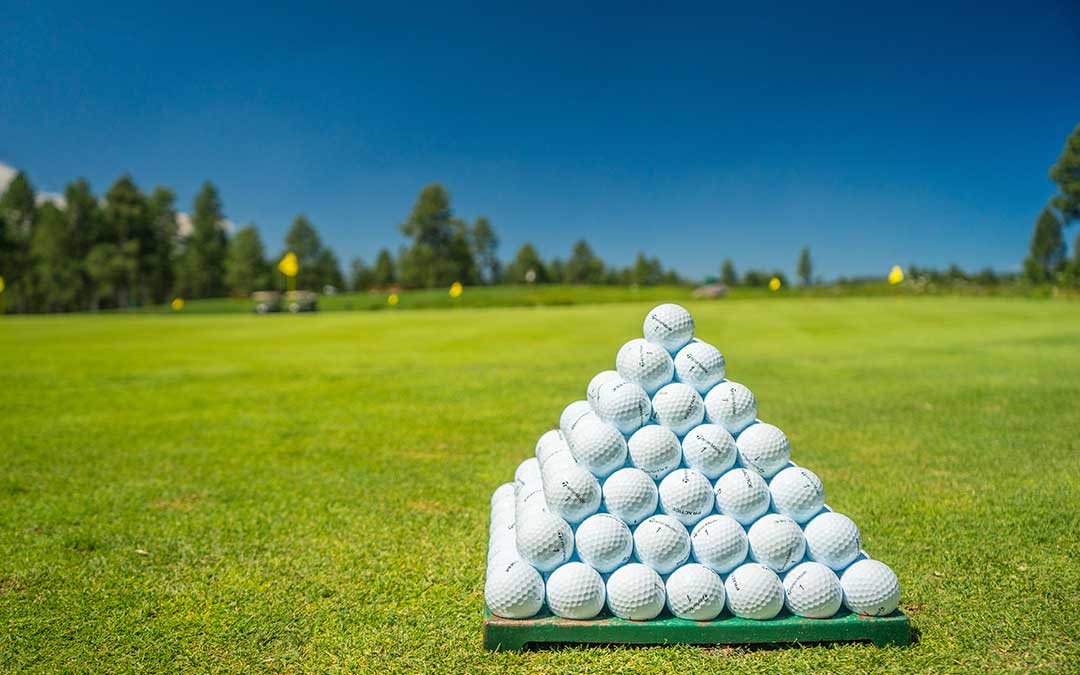
Testing is the simplest way to separate marketing from performance. Use a launch monitor session or on-course A/B testing to compare carry, total distance and how the ball reacts on full wedge shots and chips. Look for consistent ball speed at your driver speeds and observable greenside bite on approach shots. Independent labs recommend matching choices to data: distance at mid swing speeds often favours firmer premium balls in tests, while feel and spin needs push players toward urethane multilayer designs.
Short-Game and Wedge Compatibility
Ball choice changes how wedges perform. A ball that produces higher spin from wedge strikes will allow tighter gapping around the green and more aggressive shot-making. If your wedge technique produces consistent, centered contact, shifting to a urethane multi-piece ball will likely magnify your short-game gains. If wedge contact is inconsistent, prioritise a ball that gives predictable flight and decent feel without masking contact quality.
Practical Recommendations and Trade-offs
Apply the verified testing principles: if your swing speed is in the mid range, consider balls that testing shows maintain ball speed (often firmer premium options) while also offering a urethane option if greenside control is a priority. Balance these trade-offs rather than chasing one advertised attribute. Use a fitting session or controlled on-course testing to confirm how a model performs for your swing.
Why Ball Choice Matters to Your Overall Setup
Ball choice interacts with club setup: the ball influences launch and spin numbers that you try to achieve with driver loft, iron profiles and wedge gapping. Choosing an appropriate ball reduces the need to overcompensate with club changes. In short, a thoughtful ball choice makes the rest of your equipment fit your game more smoothly.
Closing guidance
For mid handicappers the best golf balls are not the ones with the loudest ads but those that match swing speed, deliver reliable distance at your speeds and give you the greenside control you need. Use compression as a guide, prefer urethane multi-piece designs if you want more short-game spin, and always validate choices with testing rather than assumptions.
Author: {William L.}