Driving range tees and the Royal St George’s routing: reading dunes, wind and…
Royal St George’s is one of England’s most immediately recognisable links. Built across natural dunes on Sandwich Bay and first opened in 1887, its identity is not an applied style but the honest geometry of ridges, hollows and plateaux. This analysis reads the course as a journey — not a scorecard — and explains how undulations, deep bunkering and constant wind produce an unfolding set of strategic decisions from the opening holes through the closing stretch.
Editorial summary
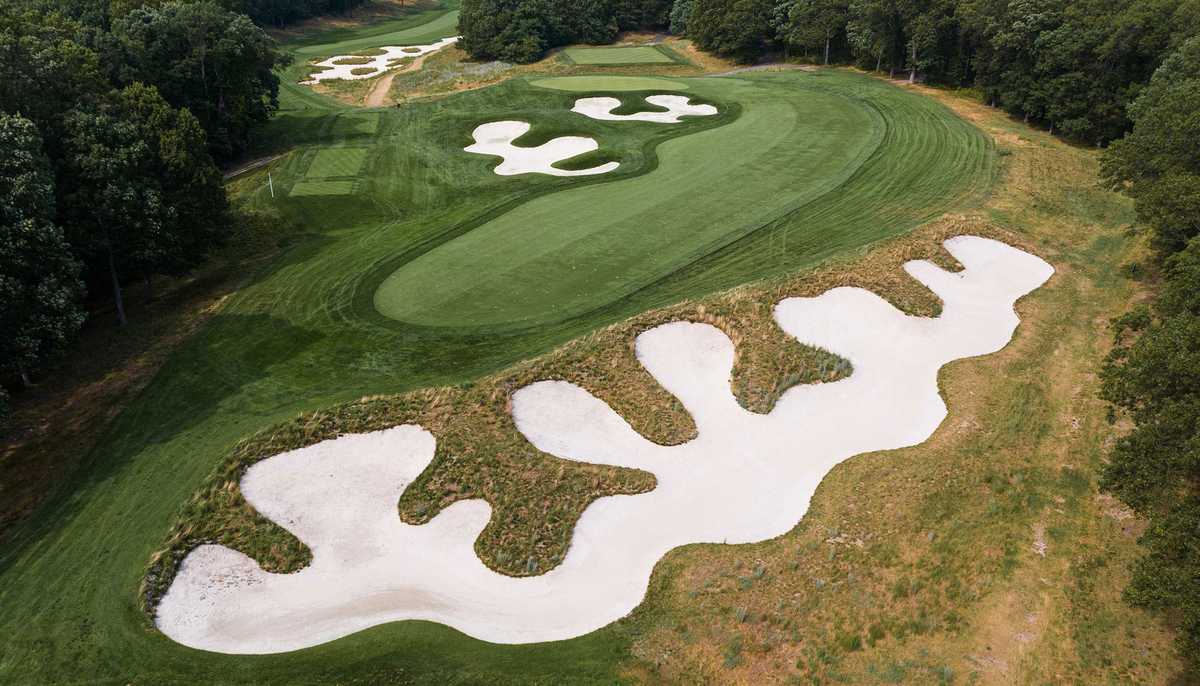
Royal St George’s relies on natural dune landforms, severe pot bunkers and elevated, undulating greens. Its routing alternates directions to force continual wind adjustment and invites creative ground play across firm links turf.
What you will learn here
- How the opening stretch introduces the site’s dune-driven character.
- Why frequent changes of direction increase strategic complexity.
- How deep bunkers and elevated greens define approach decisions and putting.
Jump to
The opening impression of the routing
From the first holes the land speaks: natural dunes and ridges determine fairway corridors, not imposed earthworks. That early impression sets the expectations for the whole round — undulating fairways, plateaux greens and hollows that invite run and roll. The routing was conceived in the late 19th century and retains its essential alignment, so the course feels like a coherent reading of coastal links terrain rather than a series of isolated features.
The first stretch and its demands
The opening holes introduce three recurring themes simultaneously: variable wind angle, uneven lies and the presence of deep pot bunkers. Because the routing changes direction frequently, the opening stretch rarely lets a player settle into a single shot shape. That produces early tactical choices — play lower to control the ball in wind, or use the ground game to take advantage of runouts across firm sand-based turf. Early approaches also make clear that many greens sit on raised plateaux, increasing the premium on precise approach trajectories and proper club selection.
The middle of the round and its strategic shifts
As the round moves into the middle holes the architecture sharpens. The course uses natural hollows to magnify the defensive power of bunkering: pot bunkers are deep and often sit where an errant approach will lose the hole. Because the routing alternates directions, players must constantly change their wind strategy and shot shape. The middle sequence therefore becomes a test of adaptability — who can best interpret wind shifts and exploit or mitigate bounce across the firm fairways and surrounds.
Signature holes and why they matter
Signature moments at Royal St George’s are not only about single spectacular greens but about how a hole combines elevation, bunker depth and wind into one decisive challenge. Elevated green sites on plateaux force approach shots to carry hazards and stop quickly on firm turf, while severe bunkers punish even modest misses. These elements together create holes where one shot defines the hole’s result — a tightly struck approach can be rewarded with a straightforward putt, while a slightly misjudged wind or bounce often ends up in a pot bunker and costs strokes.

The par-3 and green-complex story
Par-3s at Royal St George’s emphasise target selection and ground reaction. Greens are frequently undulating or set on plateaux, so club choice and landing area are as important as trajectory. On firm days the ball will run out from the tee; on windier days the green’s contours and subtle slopes dictate run-on areas and recovery possibilities. Together with deep bunkers, these green complexes make for a putting surface that can be straightforward only when approach precision and wind reading are correct.
The closing stretch and how it builds drama
The routing reserves its final holes to summarise the test: repeated demands to play into or across varying winds, precise approaches to elevated greens, and the ever-present risk of severe bunkers. The sequence builds cumulative pressure because the defensive features remain constant while fatigue and scoreboard tension grow. The result is a closing sequence that often separates those who have mastered the ground game and wind strategy from those who have not.
The course as a complete journey
Viewed end to end, Royal St George’s reads like a lesson in how natural linksland can produce a coherent architectural identity. Ridges, hollows and plateaux are reused as strategic devices; deep bunkering functions as a primary defensive layer; and the routing’s frequent changes of direction ensure the wind is an active participant. The journey rewards players who can adapt shot shape, play the ground, and judge the interaction between bounce and wind.
Why this layout stays in the mind
The course lingers because its challenges are elemental and honest. Rather than relying on theatrical earthmoving, Royal St George’s asks players to read landscape, wind and bounce simultaneously. That undulating, dune-driven character — combined with some of the deepest bunkers on the Open rota and elevated, undulating greens — gives the course a rugged, unmistakable personality that endures across generations and championship setups.
Author: {Eric M.}