Reading Ganton as Tactical Blocks: A course-by-course strategic guide
Ganton Golf Club is a compact champion of strategic subtlety: an inland course in North Yorkshire that plays like a traditional links. This piece invites readers to "read" Ganton not as a string of isolated pars but as a sequence of interlocking tactical blocks, showing how routing, soil, bunkering and greensmanship shape decisions across a round.
The short version
Ganton’s identity rests on firm, sandy turf, cross-wind routing and heavily contoured greens. The course was formed in the 1890s and refined by several leading architects; played as tactical clusters, its finishing sequence and alternating directions demand nuanced management more than power.
What you will learn here
- Why Ganton reads like a links despite its inland location.
- How alternating routing and firm turf turn holes into tactical blocks.
- Which stretches define the club’s competitive and architectural character.
WHERE THE COURSE BEGINS
Golf was first played at Ganton in the 1890s, commonly cited as established around 1891. From its earliest days the site showed the features that would give it a links-like personality: free-draining, sandy subsoil and naturally firm turf. Those ground conditions made it possible for the course to develop a running game and allowed architects to exploit contours and run-up shots in ways more usually associated with seaside links.
THE ORIGINAL DESIGN IDEA
Early layouts at Ganton were shaped by successive hands rather than a single manifest design. The original thinking favoured use of existing landforms over dramatic artificial shaping: the routing sweeps across ridges and hollows, and fairways were left to run. That philosophy encouraged strategic decisions based on angles, ground game and position rather than raw distance.
REDESIGNS, RESTORATIONS, AND CHANGES
Across the early 20th century Ganton drew input from a long list of leading professionals and architects, including Harry Vardon, James Braid, Harry Colt and Dr. Alister MacKenzie. Rather than imposing a single stylistic overhaul, these figures refined holes, altered bunkering and tightened green complexes in ways that preserved the course’s tactical core. The cumulative effect of those interventions is a layout that feels layered: historic decisions are still legible in the routing and strategic choices it presents today.
LANDSCAPE, ROUTING, AND COURSE IDENTITY
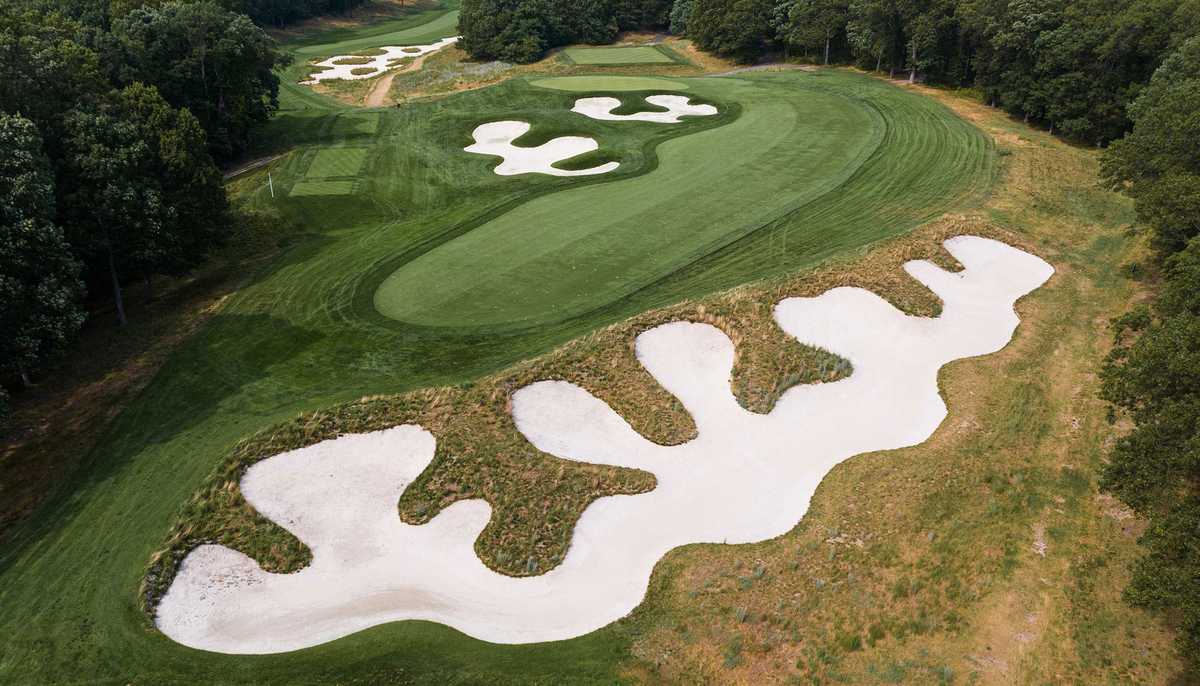
Ganton’s routing is a central part of its identity. Holes frequently change direction so consecutive holes rarely run the same line; that alternation multiplies the strategic influence of the wind and forces players to re-evaluate shot selection hole by hole. The sandy subsoil and firm, fast playing surface support aggressive ground play, while gorse and heather lining many fairways and deep, penal bunkering reward accuracy and penalize waywardness.
READING THE COURSE AS BLOCKS
To read Ganton strategically, group holes into short blocks where a shared tactical theme governs decisions.
For example, an opening block may emphasise angle of attack and positioning to threads of gorse; a middle block often forces players to contend with cross-currents of wind as holes reverse direction; the closing block becomes the decisive tactical test. Seeing the course this way clarifies why missing a single firing lane can have cascading consequences across subsequent holes.

THE FINISHING STRETCH
Ganton’s closing holes are widely noted for their intensity. The 16th–18th constitute a demanding finishing sequence where strategic options and risk–reward decisions come to a head. The 17th is especially interesting as an "alternating" hole that can play as different pars depending on how lines are set; the 18th requires a perpendicular tee shot into a narrower corridor and a long approach back over entrance roads and trees, demanding precise geometry and course management under pressure.
GREENS AND APPROACH STRATEGY
Many greens at Ganton present open fronts that invite run-up approaches; at the same time green complexes are often subtly to severely contoured. That combination multiplies strategic options: the player who reads the line and uses the ground game effectively can score well, while those who rely solely on carrying the ball suffer for misjudging contours and speed. In short, approach strategy at Ganton is as much about selecting the correct angle and landing area as it is about distance control.
TOURNAMENT HISTORY AND COMPETITIVE MEMORY
Ganton has hosted significant amateur and professional events over time, which cemented its championship pedigree. Tournament play exposed the course’s strengths—firmness, strategic bunkering, and a routing that tests all aspects of a player’s game—and helped shape its reputation among golfers and critics as a venue where accuracy and strategy trump brute length.
HOW THE COURSE IS SEEN TODAY
Today Ganton is often described as an "inland links": a course inland in the Vale of Pickering that nonetheless plays with the spirit of seaside links. Its reputation rests on enduring qualities—firm turf, gorse and heather, strategic bunkers, and a routing that constantly changes direction—that reward a thoughtful, position-oriented style of play. For modern players and architects, Ganton shows how cumulative, careful interventions can preserve tactical richness.
WHY THE COURSE STILL MATTERS
Ganton matters because it demonstrates how site, soil and successive sensitive hands can produce a course that challenges golfers across decades. Rather than relying on a single architectural statement, its layered history—beginning in the 1890s and refined by multiple leading practitioners—produced a compact championship test that still teaches the same lesson: manage angles, respect the ground game and value placement over sheer length.
Author: {Cynthia D.}