Tenby Gales: St Enodoc’s Atmosphere Through Relief, Horizon and Light
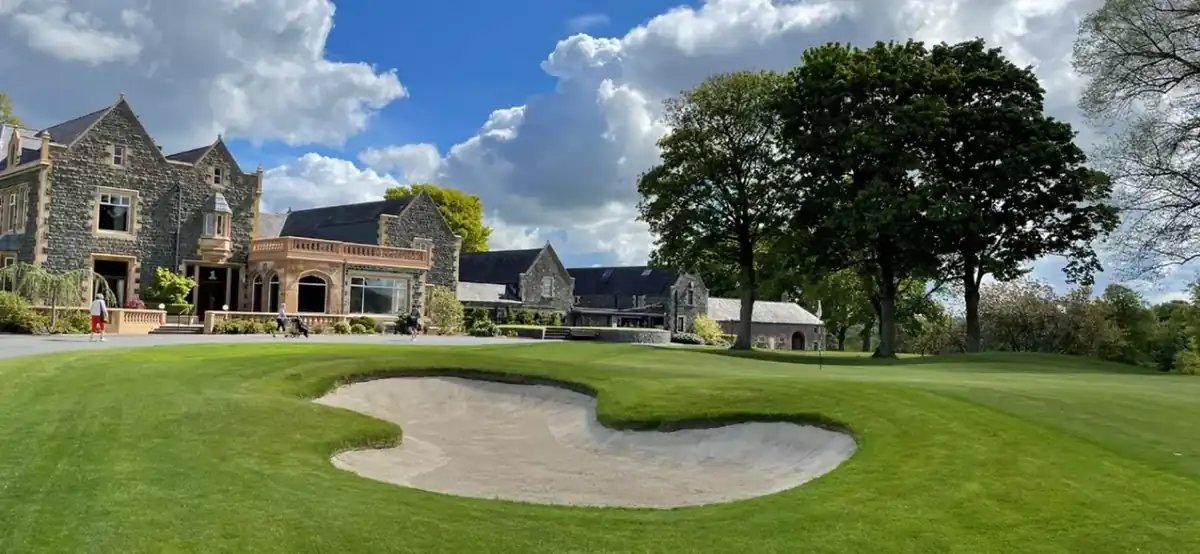
There are images that announce themselves as trophies of action, and there are images that ask only to be lived with. The Tenby Gales view of St Enodoc belongs to the latter. Here the course is read as a composed landscape: ribs of dune and grass, a steady horizon, and a temperate, breathy light that together convert a sporting place into an interior-ready scene. The photograph asks no narrative of winners or shots; it asks only that you notice the way the land breathes.
The first thing the print offers is relief—the subtle rise and fall that gives a fairway its voice. At St Enodoc that relief is modest rather than theatrical: gentle humps, wind-scoured hollows and the long, horizontal planes between them. These tonal shifts cast soft shadows and organize the composition. Viewed as wall art, those contours become a quiet geometry for a room, a rhythm that sits comfortably above a sofa or along a hallway. The eye moves along the ridges and rests in the hollows exactly as it would across cushions and throws, making the picture an architectural ally rather than an interruption.
Equally essential is the horizon. Not a blank line but a measured meeting of sea and sky, the distant edge holds the view together and gives scale without spectacle. A restrained horizon offers an instant of visual calm: it stabilizes the scattering of grasses, the sweep of fairway and the small human marks that hint at play without insisting upon it. That stability is what allows the image to function in interior spaces; it frames the room’s sightlines and never competes with them, conversing gently with other objects rather than demanding attention.
Light at St Enodoc is seldom harsh. The Tenby gales that the title evokes are felt through a quality of illumination that is diffuse, cool and shifting—sun filtered through coastal mist or late afternoon clarity that softens edges. This light sculpts texture: the grain of the greens, the feathered tips of marram grass, the subtle sheen of a well-kept fairway. In a print, that light becomes the primary material. It lends the image an enduring elegance because it is more about atmosphere than moment; it suggests seasons and daily ritual, and so the art ages with the room rather than dating it.
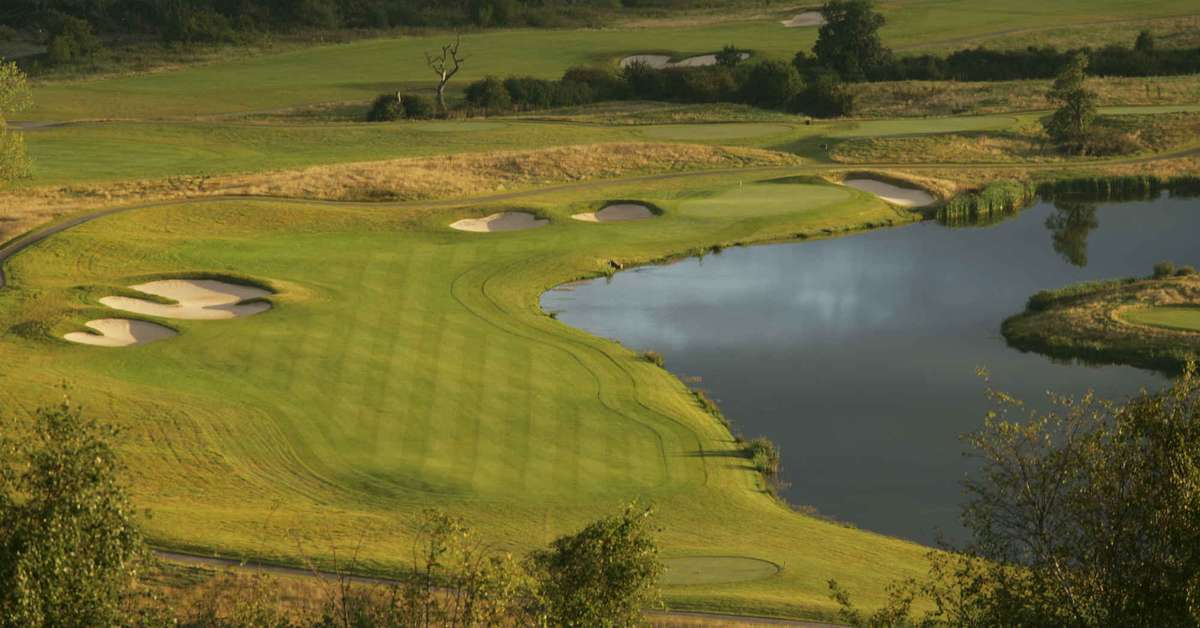
Texture and visual rhythm are what make a golf course picture feel inhabitable. The image of St Enodoc presents a surface to live with—the velvet-like sweep of greens, the tawny coarser bands of rough, the dotted punctuation of bunkers—each element a repeatable motif that complements domestic textiles. When hung, the print invites a slow study: a hand tracing the fairway’s path, a thought returning to the light on a particular swell. This is not spectacle; it’s a quiet rehearsal of place that rewards repeated viewing.
There is also a human restraint in such imagery. Any hint of clubhouse or flag is measured and modest, a whisper of presence rather than foreground drama. That restraint allows the viewer to project their own memory or longing into the scene: a coastal walk at dusk, a morning coffee watched from a window, a retreat where horizon and hill do the work of consolation. That emotional latitude is why course-led images are so useful in interiors—they offer familiarity without specificity, mood without narrative insistence.
Finally, consider why this reading of St Enodoc translates into lasting decorative elegance. The ingredients are simple and durable: composed relief, a steady horizon and a consistent light. Together they make a visual grammar that reads as calm and refined. In a living room, study or corridor, a Tenby Gales print functions like a finely chosen textile or a meditative painting—an image that anchors a space and rewards quiet attention. It is golf translated into atmosphere, a piece of landscape that feels, quite naturally, like part of the home.
Author: {Cynthia D.}