Seve Ballesteros: How Creative Audacity Redefined European Golf
Severiano "Seve" Ballesteros remains one of golf's most magnetic figures: a Spaniard whose improvisational short game and daring shotmaking changed how Europe competed at the highest level. This piece traces the arcs and turning points in a career that moved from a teenage major contender to a global champion and Ryder Cup force.
Editorial summary
Seve Ballesteros's trajectory — early emergence as a major contender, signature victories at The Open and Augusta, world-class influence in the 1980s and Ryder Cup leadership — reshaped modern European golf.
What you will learn here
- How Seve's early breakthrough signalled a new European competitiveness.
- Which major victories defined his career and why they mattered.
- How his shotmaking and Ryder Cup role built a lasting legacy.
EARLY ROOTS AND FIRST CONTACT WITH GOLF
Severiano "Seve" Ballesteros was born on 9 April 1957 in Pedreña, Cantabria, Spain. From that coastal region he developed into a rare European talent whose game combined natural creativity with fierce competitiveness. His rise to international attention was unusually rapid: by age 19 he was already contending at golf’s highest level, an early sign that his instincts and short-game imagination would translate beyond local courses.
THE FIRST PROFESSIONAL YEARS
Seve's early professional presence was notable for how quickly he moved into contention on major stages. A defining early moment came when he finished runner-up at The Open in 1976 as a teenager; that result announced a new kind of European threat to established champions and helped set the tone for the late 1970s and 1980s.
THE BREAKTHROUGH THAT CHANGED THE CAREER
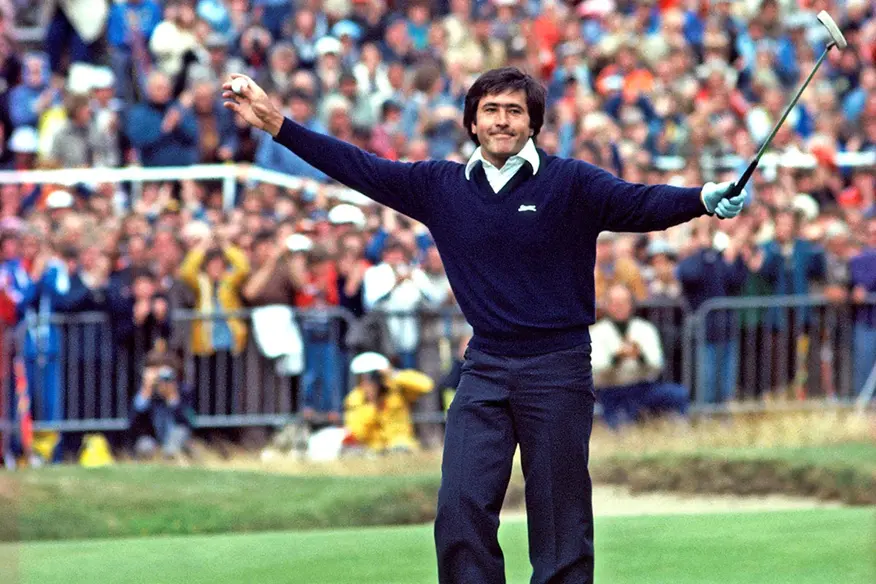
That breakthrough crystallised with his first major victory at The Open in 1979 at Royal Lytham & St Annes. Winning that championship transformed Seve from promising talent into a defining figure for European golf. Success at The Open validated the risk-taking elements of his game on links courses and opened the door to global recognition.
THE STRONGEST YEARS AND SIGNATURE MOMENTS
Seve won five major championships across his career: three Open Championships (1979, 1984 and 1988) and two Masters Tournament titles (1980 and 1983). Those victories were not only individual peaks; they established a pattern. He proved repeatedly that his short-game creativity and ability to produce escape shots could decide the game's biggest events, whether on the links or at Augusta.
STYLE, TEMPERAMENT, AND COMPETITIVE IDENTITY
Seve's playing identity was unmistakable: a bold, improvisational shotmaker who thrived when the situation demanded invention. Reputable outlets and golf institutions describe him as a creative risk-taker whose escape shots and short-game improvisation redefined expectations for European players. His charisma and competitive magnetism made him both a fan favourite and a psychological force in match play and majors.
KEY RELATIONSHIPS, RIVALRIES, AND RYDER CUP INFLUENCE
Beyond individual victories, Seve's influence was magnified through the Ryder Cup. He was a long-serving Ryder Cup player and later captain, leading Europe as captain to victory at Valderrama in 1997 — the first Ryder Cup held in continental Europe. His Ryder Cup role helped transform the event into a showcase where European unity and competitive fire became central themes.
CAREER SCOPE, RANKING AND HONOURS
Across his career Seve accumulated a widely reported total of wins in the high eighties to low nineties depending on counting method. He also reached the top of the world rankings during the late 1980s, a period when he was widely recognised as the game's leading player for stretches of time. Institutional recognition followed: Seve is an inductee in the World Golf Hall of Fame and is consistently cited as one of the most influential European golfers of the modern era.
HOW THE CAREER IS VIEWED TODAY
Seve's legacy is twofold. Competitively, his five majors and sustained presence at the top of the sport in the 1980s position him among golf’s elite. Culturally, his approach — creative, audacious, and emotionally charged — altered perceptions of European golf, inspiring generations of players who saw in him a template for bold, imaginative play.
WHAT THE STORY REVEALS ABOUT THE GOLFER
Seve Ballesteros's career shows how personality and technique can combine to change a sport. His shotmaking widened tactical possibilities for players on difficult courses, while his Ryder Cup leadership helped forge a continental confidence that persists. The chronology from teenage contender to five-time major winner and Ryder Cup captain makes clear why he remains central to golf’s modern memory.
Author: {Cynthia D.}