Golf Scorecard Explained: How to Read Yardage, Par, Handicap and Totals
A golf scorecard is the compact map of a round. Knowing how to read it — hole numbers, yardage by tee, par, hole Handicap/Stroke Index, and the totals rows — makes every round easier to plan, play and post. This guide explains the key rows and how to apply your course handicap for net scoring in beginner-friendly but precise terms.
Quick summary: A typical scorecard shows holes 1–18, yardages for each tee, the par for each hole, a Handicap/Stroke Index column ranking holes 1–18, and boxes to record scores with front-nine, back-nine and total rows. Course Rating and Slope often appear for converting Handicap Index to a Course Handicap.
Quick access: What a scorecard shows • How to apply handicap strokes • Recording and posting scores
What a scorecard shows
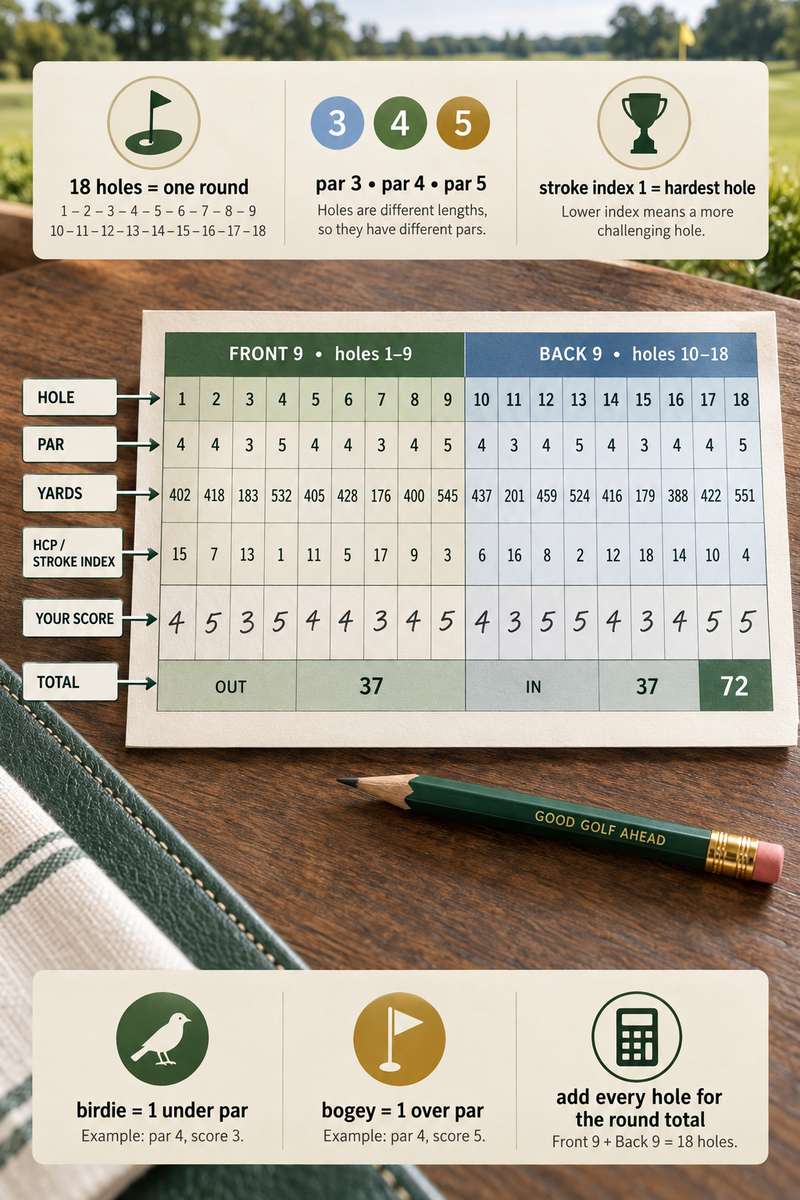
Most scorecards list hole numbers, usually 1–18, across the top or down the side with rows beneath for important data. Common rows include yardage (often one row per tee colour), par (typically par-3, par-4 or par-5), and a hole Handicap or Stroke Index that ranks holes from 1 (most difficult) to 18 (least difficult).
Cards also present sums: front-nine ("out") totals, back-nine ("in") totals and the overall yardage and par for the tees being played. These totals set basic expectations for distance and the course’s total par, for example a common total par is shown on the card.
Yardage and par: planning each hole
Yardage rows give the length of each hole from the various teeing areas; courses that provide multiple tee boxes print separate yardage rows for each. Use the yardage totals for your chosen tees to judge how many long shots, mid-range approach shots and short-game shots you will face over the round.
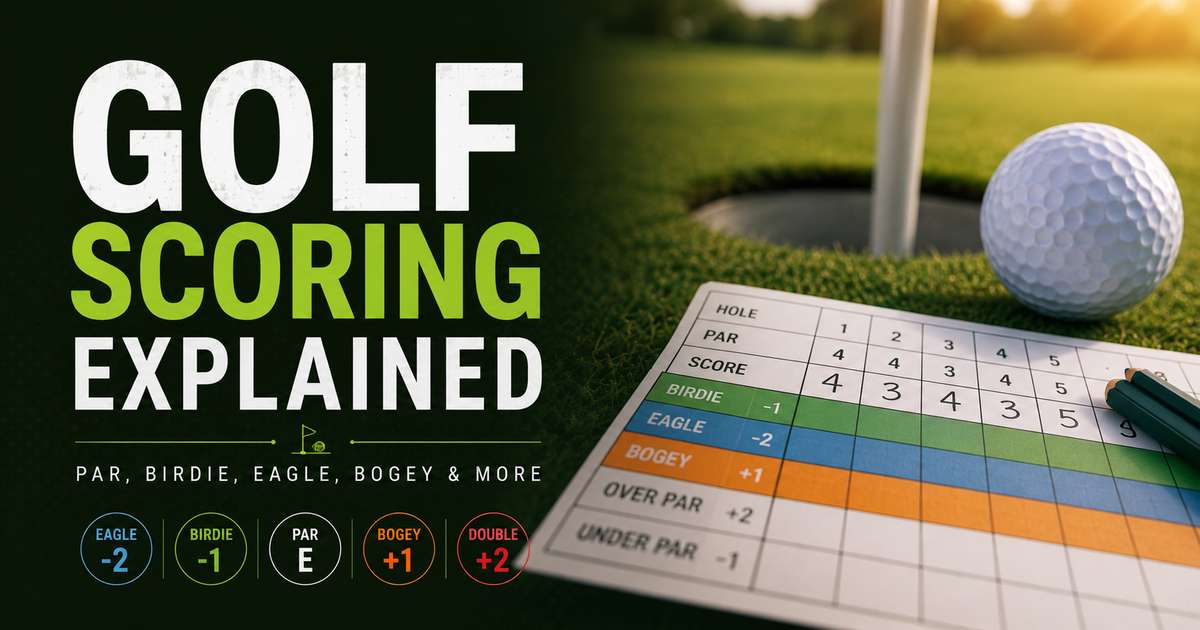
The par row shows the expected score for each hole—par-3, par-4 or par-5—and the card totals provide front, back and overall par. That par row is the baseline for scoring terms such as birdie, bogey or eagle during play.
Hole Handicap / Stroke Index explained
The hole Handicap or Stroke Index (sometimes labelled HCP or SI) ranks the 18 holes in order of playing difficulty. Committees publish this ranking to allocate handicap strokes in stroke-play competitions. In practice, players use the Stroke Index to decide which holes receive a handicap stroke when calculating net scores.
Course Rating, Slope and Course Handicap
Many scorecards print the Course Rating and Slope Rating. These numbers are used to convert a player’s Handicap Index into a Course Handicap for the specific tees being played. The Course Handicap calculation uses the Course Rating and Slope and the card’s par to produce the number of handicap strokes a player receives on that course and set of tees.
Once you know your Course Handicap for the tees being played, you can apply strokes to holes according to the Stroke Index row.
How to apply handicap strokes on the card
To apply handicap strokes during stroke play: determine your Course Handicap for the tees you’re playing, then give or receive strokes on holes whose Stroke Index falls within that Course Handicap. For example, if your Course Handicap is 12, you would receive one stroke on each hole with Stroke Index 1–12.
Higher Course Handicaps may receive two strokes on holes where the Stroke Index is used twice; the Stroke Index row is the reference that tells you which holes are adjusted before computing your net score.
Recording scores and posting
Scorecards provide blank boxes to record each hole score and rows labelled 'out' (front nine), 'in' (back nine) and 'total'. Many cards also show rows for gross and net totals so players can record both their raw strokes and their handicap-adjusted score.
For official posting, many associations accept hole-by-hole posting (HBH) through online systems that display the same yardage, par and Stroke Index information from the card. HBH systems use those entries to calculate handicapping records.
Beginner-friendly tips for reading a card
Start by locating the tee yardage totals and the overall par for the tees you will play. Check the par row to set expectations for each hole and glance at the Stroke Index to see where handicap strokes will likely be applied. Record your score hole-by-hole and total the front and back nines as you go to avoid end-of-round surprises.
When in doubt, use the par and yardage together: long yardage plus a high Stroke Index indicates a tougher hole where conservative course management often pays.
Scorecards, posters and clubhouse visuals
Scorecards are a natural design element for golf posters and clubhouse wall art because they condense the course’s layout, par and yardage into a graphic grid. Vintage prints and study decor often borrow the scorecard’s tidy rows and numeric language to evoke a course’s character while celebrating holes, pars and famous tee-to-green relationships.
Understanding the scorecard makes those prints more meaningful: the yardage and par columns are not just numbers, they describe how a course asks golfers to plan shots and manage risk.
Closing interpretation
A scorecard is more than a record sheet: it is the course scripted into numbers. Reading its hole numbers, yardages, par, Stroke Index and rating information gives you the context to choose clubs, manage strategy, and calculate gross and net scores reliably. For beginners, the card is your pre-round game plan; for fans and art lovers, it’s a concise portrait of the course that often appears again in posters and clubhouse decor.
Author: Alex R.