Muirfield: How a Routing of Balance, Strategy and Severity Came to Define a…
Muirfield is less a single moment than a carefully composed sequence: a course whose routing and revisions have been calibrated to reward strategic thought and resist flamboyance. This piece reads Muirfield as a journey — how it began, how successive hands refined it, and how that trajectory produces the balance between tradition, strategy and severity for which the course is known.
The short version
Muirfield’s routing — first formed under Old Tom Morris and largely clarified by Harry S. Colt — places emphasis on alternating wind exposures, measured approaches to green complexes, and a pattern of strategic decisions rather than forced heroics. Later interventions have preserved that framework while sharpening the course for championship play.
What you will learn here
- Why the move to Muirfield in 1891 set the club on a different architectural path.
- How the two-nine rotation creates a unique strategic rhythm across a round.
- Which design interventions preserved Colt’s routing while adding modern championship sternness.
THE OPENING IMPRESSION OF THE ROUTING
Muirfield’s first impression is rooted in control. When the Honourable Company of Edinburgh Golfers moved to Muirfield in 1891—leaving Musselburgh to get a private site and unhurried playing conditions—Old Tom Morris laid out the initial 18 holes. That first routing established a clear purpose: a course intended to be playable for members while testable for better golfers. The opening holes therefore tend to introduce subtle strategic choices rather than immediate, brute-force demands.
WHY THE TWO-NINE ROTATION MATTERS
One of Muirfield’s defining routing features is the opposite rotation of its two nines. Rather than expose players to the same wind direction on consecutive holes, the routing turns so wind angles shift frequently. Strategically this matters intensely: a conservative line on one hole can be punished by a following hole that requires a different shot-shape or club selection. That oscillation keeps players from settling into a single rhythm and rewards shot-making clarity and course-management intelligence.
THE FIRST STRETCH AND ITS DEMANDS
The course opens by asking players to establish control of trajectory and placement. Early tee shots are not simply about length; they are about choosing angles into well-protected greens and understanding how the wind may alter approach windows a hole later. That early emphasis on placement sets up the intellectual tone of the round: measure, commit, and plan for the sequence ahead.
THE MIDDLE OF THE ROUND AND ITS DECISIONS
As the round progresses, Muirfield’s mid-section deepens the strategic conversation. Historical reworking by Harry S. Colt in the early 20th century gave the routing and many hole concepts that remain central today. Colt’s hand clarified risk lines and approach angles, creating a middle stretch where players repeatedly face choices between conservative positional play and riskier, reward-seeking options. The net effect is a sustained test of thought: pars earned through planning, bogeys or worse from rushed aggression.
THE PAR-3, GREEN-COMPLEX AND BUNKERING STORY
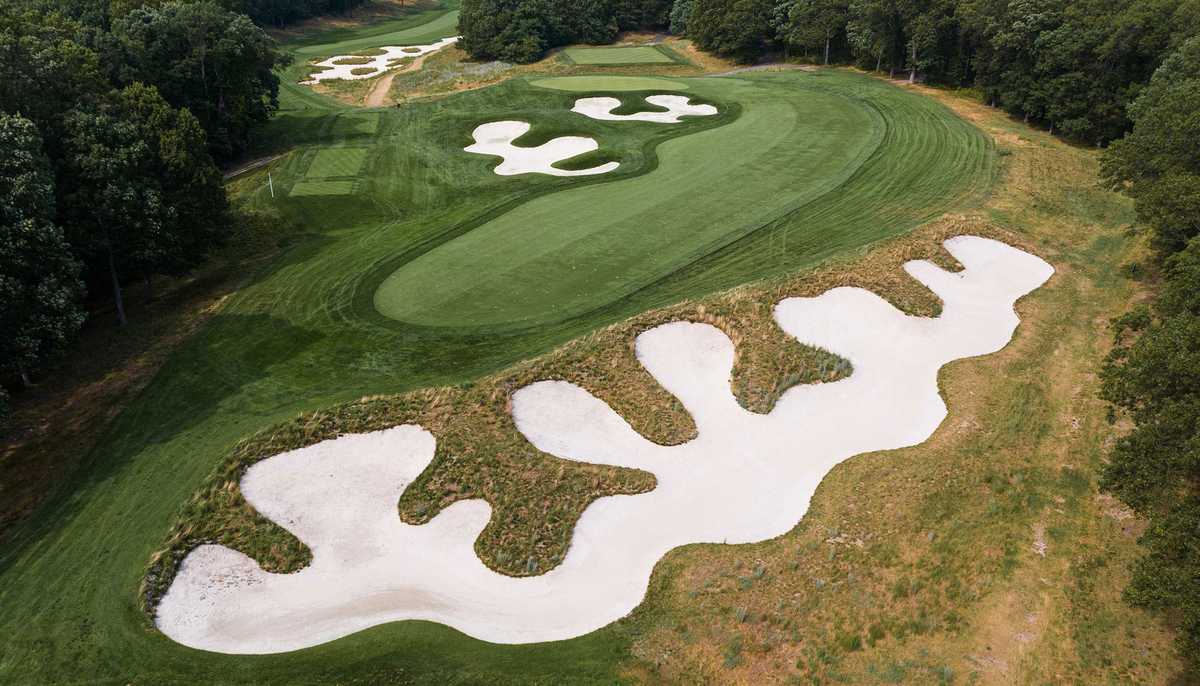
Muirfield’s green complexes and bunkering are the places where design intention and later stewardship intersect most visibly. Over the 20th and 21st centuries architects and course historians — including Tom Simpson and more recent stewards like Martin Hawtree — have adjusted bunkers and green sizes to both restore earlier intentions and maintain championship standards. These interventions typically avoided wholesale rerouting; instead they refined green contours, removed or reshaped bunkers, and enlarged or restored greens so that the original strategic prompts remain but the course resists modern power advantages.

SIGNATURE HOLES AND WHY THEY MATTER
Rather than relying on a single postcard hole, Muirfield’s signatures are systemic: holes that illustrate the routing’s themes. Signature moments tend to be those that demand the clearest strategic thinking — a tee shot that defines the angle of attack into a guarded green, or a mid-round hole that changes the preferred club selection because the wind has swung. These holes endure because they exemplify the course’s balance between traditional craftsmanship and the severity necessary for championship testing.
HOW THE COURSE HAS BEEN ADJUSTED AND DEFENDED
Muirfield’s evolution is notable for its restraint. After Old Tom Morris’s initial layout, Colt’s major redesign in the 1920s produced the routing logic that endures. Later changes were surgical: bunkers removed or reshaped, greens restored to earlier sizes or contours, and selective tweaks to ensure that The Open and other championship setups remained rigorous. Those choices reflect an architectural philosophy that prefers to preserve routing integrity while using details to adjust difficulty and strategic clarity.
THE CLOSING STRETCH AND HOW IT BUILDS DRAMA
The finish at Muirfield is deliberate rather than theatrical. The routing’s alternating wind exposures mean the closing holes can force an emotional and tactical double-take: the shot that would succeed under one wind may be unwise under the next hole’s breeze. That pattern creates cumulative pressure — a player’s mental ledger from earlier strategic choices often arrives at the closing stretch and changes how they approach the final holes. It is a finish that rewards sustained strategic discipline more than last-minute heroics.
THE COURSE AS A COMPLETE JOURNEY
Viewed in full, Muirfield is a study in balance. From its 1891 move to the private site and Morris’s first 18, through Colt’s clarifying redesigns, to later sympathetic adjustments, the routing has been conserved and tightened. The result is a course that reads as a coherent journey: recurring tests of placement, shifting wind angles that force continual recalibration, and green complexes that demand careful approach play. That trajectory — creation, reworking, defensive detailing — explains why Muirfield is regarded as both fair and severe.
WHY THIS LAYOUT STAYS IN THE MIND
Muirfield remains memorable because its architecture asks golfers to think in sequences. It is not simply the difficulty of an isolated hole but the rhythm of the routing and the intellectual demands it imposes over 18 holes. Revisions across decades respected that DNA, preserving the course’s tradition while sharpening its strategic teeth. For players and architects alike, Muirfield demonstrates how measured evolution — rather than radical reinvention — can sustain a course’s reputation as a model of balance.
Author: {Alex R.}