Golf Rules Explained: A Beginner’s Guide to Scoring, Tees, Fairways, Hazards…
Golf combines simple aims with many practical details. This guide explains golf rules explained for beginners: how scoring works in stroke play and match play, where play begins at the tee, how fairways and greens are treated, what hazards and penalties mean, and why the signed scorecard matters as much as the shots you play.
Quick summary: Golf is played either by total strokes (stroke play) or by holes won (match play). Play starts from the teeing area. Fairways, rough and greens define lies and strategy. Penalty areas and bunkers have special relief and penalty options. In stroke play the signed scorecard is the official record.
Quick access: Scoring|Tee & tee shots|Hazards & penalties
CLEAR DEFINITION
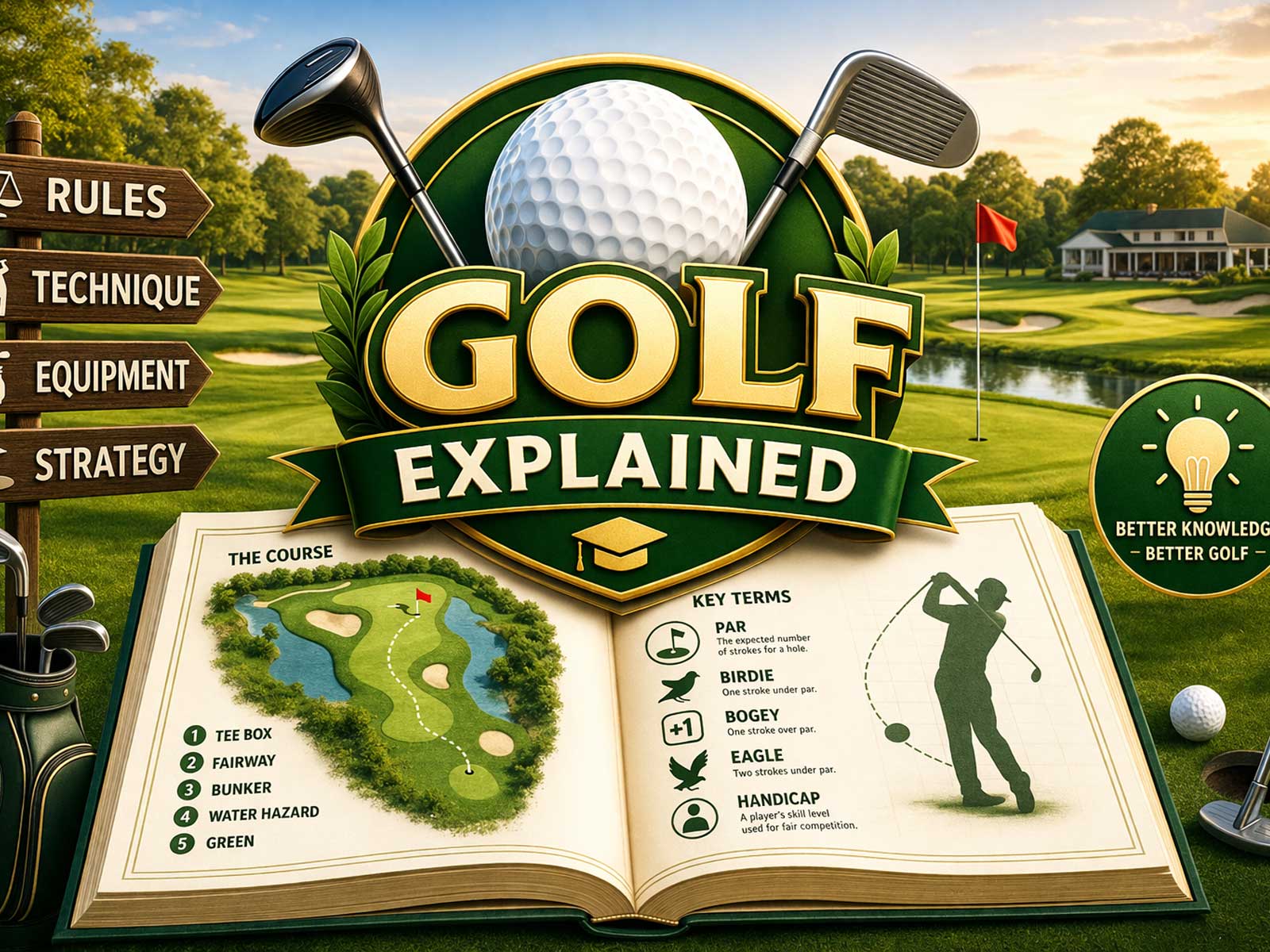
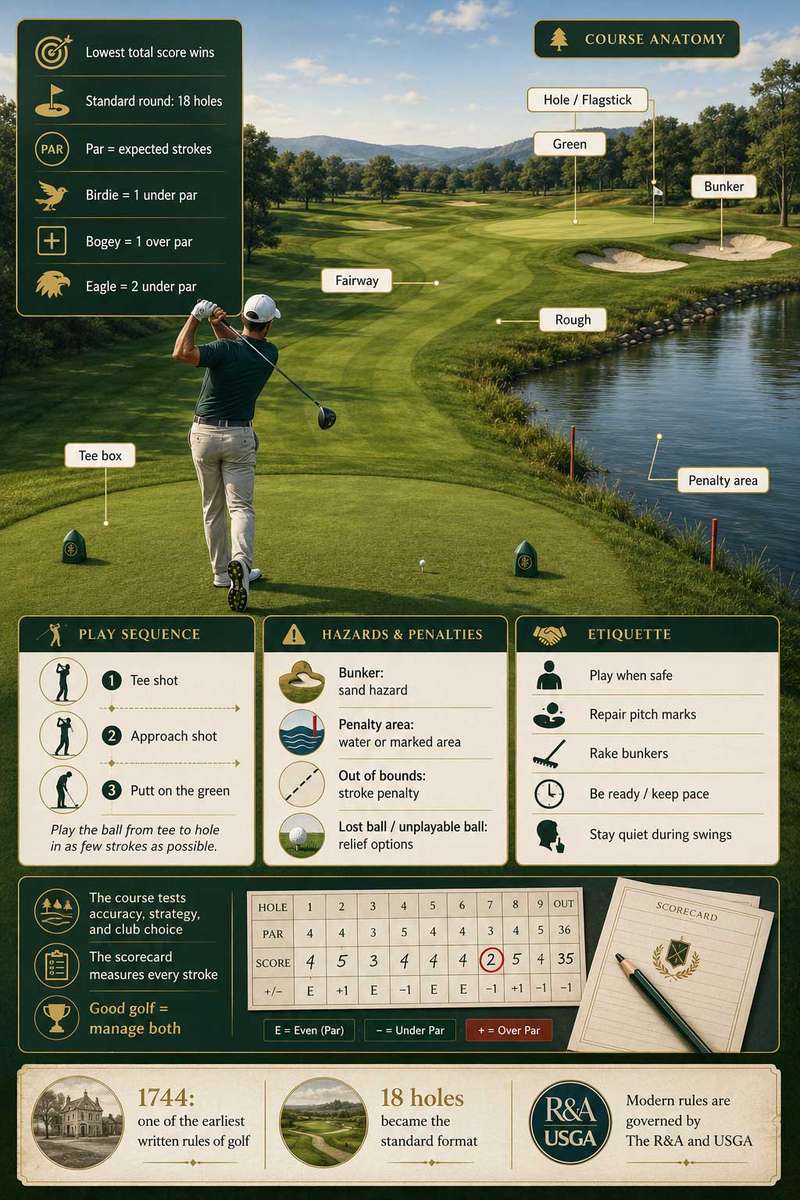
At its core, golf is a game of holes: players play from a tee, move the ball along a fairway and around hazards, and finally putt on the green into the hole. The objective is to complete each hole in as few strokes as possible. The Rules of Golf, published jointly by The R&A and the USGA, set the authoritative procedures and responsibilities for play.
HOW SCORING WORKS: STROKE PLAY VS MATCH PLAY
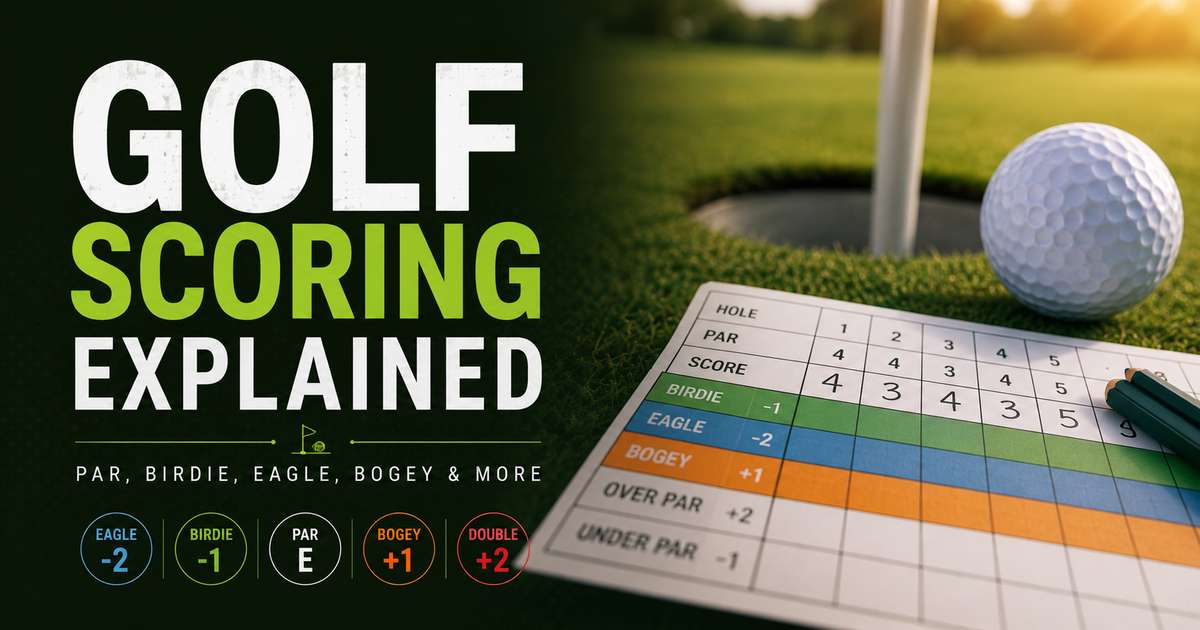
There are two primary competitive forms. In stroke play a player counts every stroke on each hole and adds them for a round total; the signed scorecard is the official record and mistakes can have serious consequences. In match play players compete hole-by-hole: the player who completes a hole in fewer strokes wins that hole and the match is decided by holes won rather than total strokes.
TEE, TEEING AREA AND TEE SHOTS
Each hole begins at the teeing area. The ball is placed on a tee within that area and the first shot is the tee shot. Choice of tee box affects hole length and strategy; a longer teeing area or forward tee changes the club selection and the lines a player chooses to reach the fairway or green.
FAIRWAYS, ROUGH AND PUTTING GREENS
The fairway is the closely mown corridor between tee and green and is typically the ideal place for an approach shot. Areas of longer grass surrounding the fairway are called the rough and they influence shot selection and difficulty. The putting green is the closely mown area around the hole where special rules apply: players may mark, lift, clean and replace the ball and may repair certain damage on the green under the Rules of Golf.
HAZARDS, PENALTY AREAS AND COMMON PENALTIES
Hazards—now often designated as penalty areas including water hazards—and bunkers create strategic challenge. The Rules provide specific relief options for penalty areas; taking relief usually carries a one-stroke penalty when a player elects stroke-and-distance or other relief options. Common penalties in ordinary play include one-stroke penalties for lost balls or out-of-bounds strokes when stroke-and-distance relief is used.
THE SCORECARD: WHY YOU PLAY THE COURSE AND THE SCORECARD
In stroke play the scorecard is the official record of the round; players and their markers must record hole-by-hole scores accurately. Signing an incorrect scorecard can lead to disqualification under the Rules of Golf. That dual reality—playing good golf on the course and keeping a correct, signed card—explains why golfers say they compete against both the course and the scorecard.
ETIQUETTE, SAFETY AND PLAYER RESPONSIBILITIES
Etiquette is central: safety, consideration for others, reasonable pace of play and care of the course are emphasized by governing bodies. Practical examples include repairing divots and pitch marks, keeping pace, and avoiding distracting other players. Serious breaches may be handled by local committees under the Rules of Golf framework.
COURSE STRATEGY AND VIEWING TIPS
Understanding tees, fairways, hazards and greens turns rules into strategy. On a long hole the tee shot determines whether a player can reach the green in fewer strokes; on a hole with prominent bunkers or water the safer club may reduce risk of penalty. For viewers, watch the tee placement, lie (fairway or rough), pin position on the green and whether a ball crosses a penalty area—these details reveal the strategic choices behind each shot.
CLOSING INTERPRETATION
Knowing the basics of golf rules explained—how scoring works, where play begins, how the course is divided, what hazards do, and why the scorecard matters—makes the game clearer on the course and more interesting to watch. Rules shape decisions: they define what relief exists, how penalties affect totals, and why accuracy in recording scores is as important as accuracy in striking the ball. That combination of landscape, procedure and record-keeping is what gives golf its distinctive challenge and its enduring appeal—in play and in prints, posters, and clubhouse memories.
Author: Eric M.