Do you have what it takes to be a professional golfer?
Many golfers ask a simple, taxing question: do you have what it takes to be a professional golfer? The honest first answer is conditional: possessing the raw skills to play well is not the same as having the repeatable technical, physical, mental and logistical profile that touring professional golf demands.
The tension is real. Beautiful swings and low weekend scores matter, but touring golf tests consistent ball-striking, short-game reliability, pressure management, fitness and long-term access. Below we unpack what those differences look like and what an ordinary or serious amateur should test first.
Quick answer
Yes, a golfer can possess elements needed for a professional career, but reaching touring professional levels usually requires demonstrable, repeatable technical proficiency, golf-specific fitness, mental skills for pressure situations, structured competitive experience and sustained financial and logistical support.
What this article reveals
- Which abilities meaningfully separate strong amateurs from touring professionals.
- How fitness and mental skills contribute to performance, beyond the swing.
- What real barriers—practice time, competition, and finance—do to career chances.
The real standard: what professional golf requires
Professional golf is best defined by repeatable performance under tournament conditions, not a single highlight round. Verified evidence shows that touring-level players distinguish themselves through consistent ball-striking, a reliable short game and effective putting. Those technical proficiencies are measurable and separate tour-level play from recreational golf.
Beyond shotmaking, professional organisations emphasise structured pathways, membership or tour status and the acceptance of payment as formal markers of professional status. But declaring yourself a professional is not the same as holding a tour card or earning regular starts—the latter depend on specific eligibility or qualification systems maintained by tours and governing bodies.
What elite golf actually requires
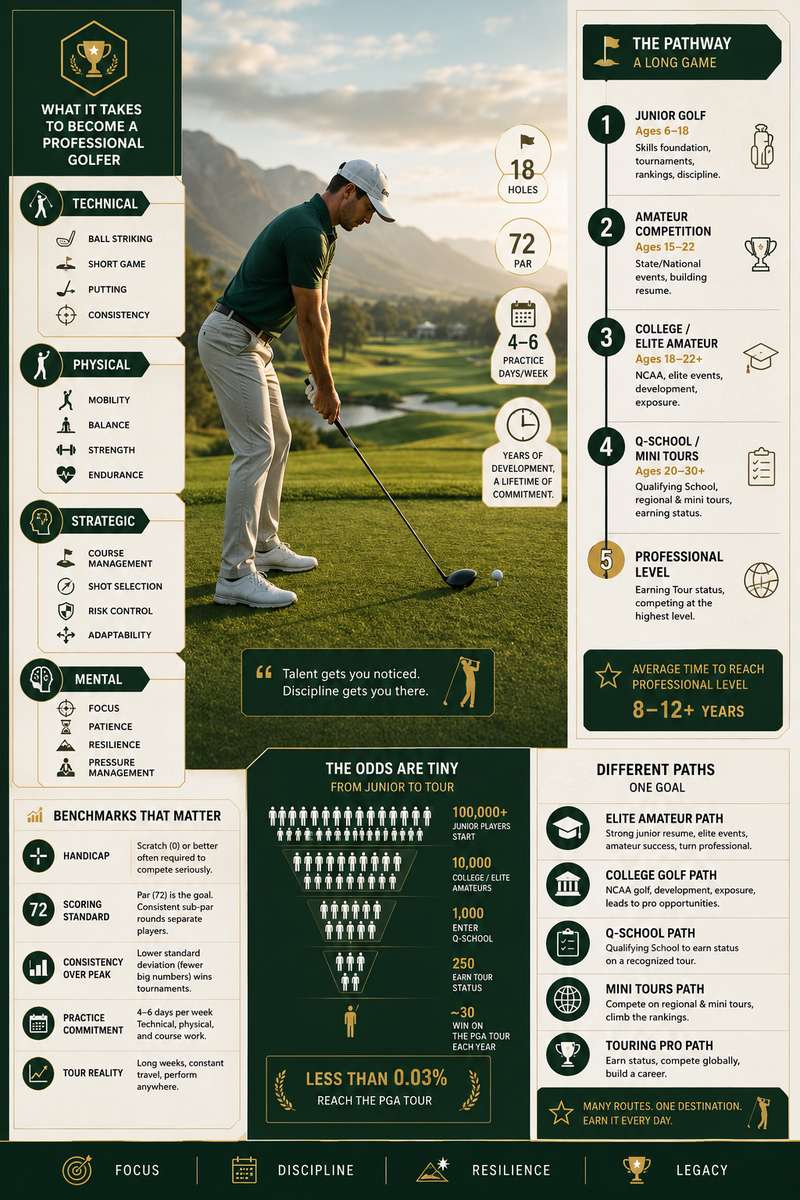
Research links physical qualities—strength, flexibility and balance—to higher proficiency in golf. These attributes support swing consistency, control of clubhead speed, and the ability to sustain performance across rounds and a season. Elite golfers commonly use golf-specific fitness programmes to maintain those attributes.
Mental skills are equally essential. Coaches and tours emphasise pressure management, resilience, decision-making and pre-shot routines. Under tournament stress these skills separate players who can reproduce peak mechanics from those who cannot.
Scoring engine and tournament consistency
One great round does not equal professional readiness. Tours and coaches look for repeatable scoring across rounds and events. That repeatability depends on consistent ball-striking, reliable short-game recovery and the ability to manage the course under pressure.
Tournament golf introduces fatigue, tough conditions and situational pressure. The combined technical, physical and mental demands mean that an ordinary amateur who occasionally shoots low may still lack the season-long reliability that touring play requires.
Swing, short game and ball control
Technical competence at the professional level is broad: it includes full-swing repeatability, approach-shot distance control, high-percentage wedge play and elite scrambling ability. Measurable ball-striking consistency and short-game skill are primary differentiators identified in the verified research.
Equipment and coaching can accelerate development, but they do not replace the need for reproducible technique and tournament-tested shotmaking. Technical work must translate to competitive settings—practice that improves repeatable outcomes under stress.
Age, development window and realistic pathways
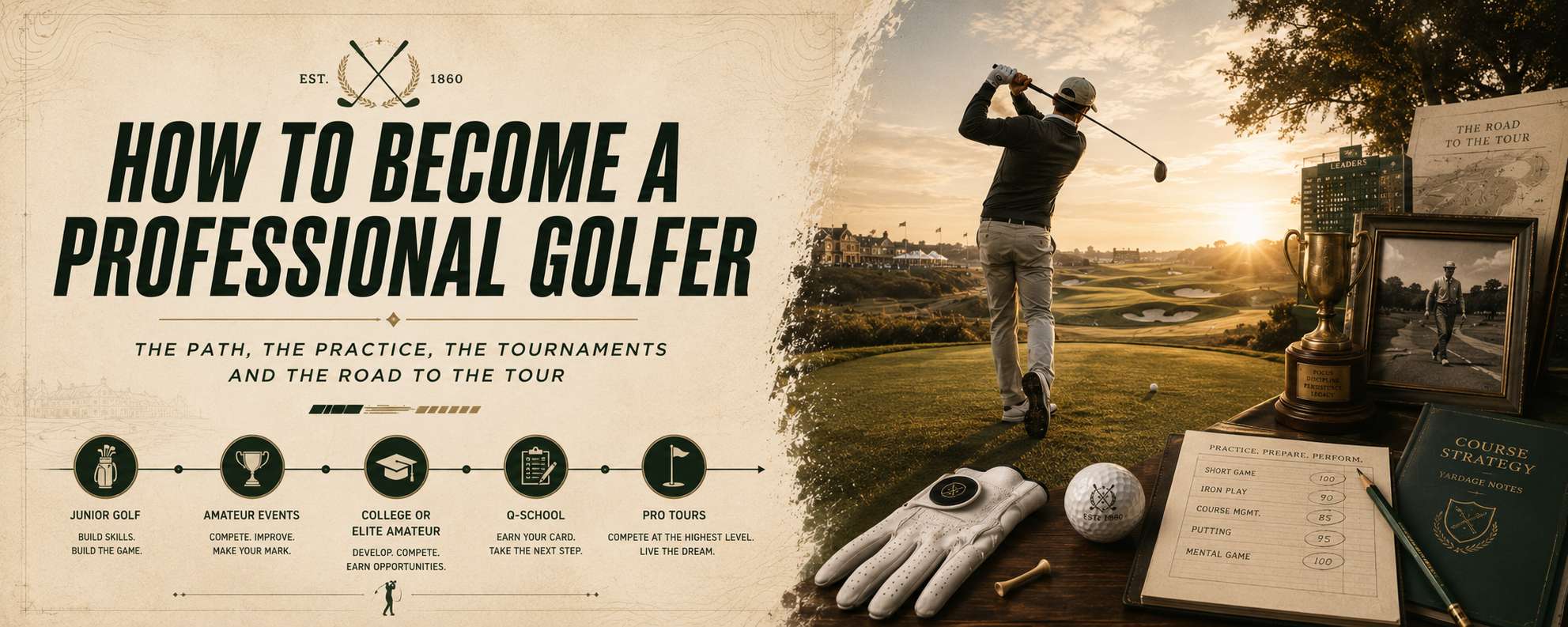
There is no single route to professional golf. Governing bodies and PGA organisations offer formal training and qualification programmes that support careers both on and off tour. For touring careers, progression usually involves years of structured coaching, competitive experience and climbing increasingly strong events.
Because pathways vary by country and tour, aspiring players must match their development to the specific qualifying and eligibility structures of the tours they target. Declaring professional status early without competitive readiness or a pathway to starts rarely creates sustainable touring opportunities.
Hidden obstacles: money, access and the long grind
Financial and logistical barriers are repeatedly reported challenges. Pursuing a touring career typically requires travel, coaching, entry fees and time—investments that rise as competition level increases. Many promising players leave the pathway due to financial strain rather than lack of talent.
Beyond money, access to sustained coaching, quality practice facilities and regular high-level competition is essential. Professional golf demands both the skills and the practical means to expose those skills to selectors, sponsors and tour qualifiers.
What to test first: practical, evidence-based checks
If you want to know where you stand, test the elements the research shows matter most:
- Technical repeatability: can you produce the same quality approach shots and short-game outcomes under simulated pressure?
- Physical support: do you have the strength, flexibility and balance to swing consistently and recover across rounds?
- Mental skills: do you have routines, resilience and decision-making that hold up in tense moments?
- Competitive exposure: are you competing against increasingly stronger fields and tracking results over a season?
These checks map directly to the performance characteristics that differentiate tour-level players from good amateurs in the verified literature.
Alternative golf careers and a realistic interpretation
Not reaching a major tour does not nullify years of training. PGA organisations and governing bodies define structured roles—teaching, club professional pathways, apprenticeships and other careers in golf—that require professional competence but not touring status. These pathways formalise skills and provide stable employment within the sport.
Understanding the distinction between touring professional and other professional golf careers is crucial. Turning professional can mean many things; the touring route is only one, and it is the most selective.
Closing: what really separates dreams from viable pathways
The decisive divide is not one single talent or an overnight conversion. Verified evidence points to a cluster of measurable strengths—repeatable technical skill, golf-specific fitness, robust mental skills and sustained competitive results—supported by access and funding. If you possess several of these and can test them against tougher competition, you have the core components to pursue a professional pathway. If key elements are missing, honest, targeted development or alternative professional roles in golf are realistic and valuable outcomes.
Author: Cynthia D.